A Bitcoin ETF lets you gain exposure to Bitcoin’s price through a regular stock brokerage account, without ever touching a crypto wallet or storing the asset yourself. Instead of buying Bitcoin directly, you buy shares of a fund that holds Bitcoin or Bitcoin-linked contracts on your behalf, and those shares trade on a stock exchange the same way shares of any company do. There are two main types you’ll come across, spot and futures, and the difference between them affects everything from how closely your investment tracks Bitcoin’s price to how much you pay in fees. This guide breaks down what a Bitcoin ETF actually is, how it works behind the scenes, and what separates a spot fund from a futures one.
What Is a Bitcoin ETF?
A Bitcoin exchange-traded fund is an investment product that trades on a traditional stock exchange and tracks the price of Bitcoin. When you buy a share, the fund issuer holds Bitcoin, or Bitcoin-related contracts, with a regulated custodian on behalf of every shareholder. You never need a crypto wallet, a private key, or an account on a crypto exchange. The fund handles all of that complexity, and what you hold instead is a regular brokerage position that moves up and down alongside Bitcoin’s market price.
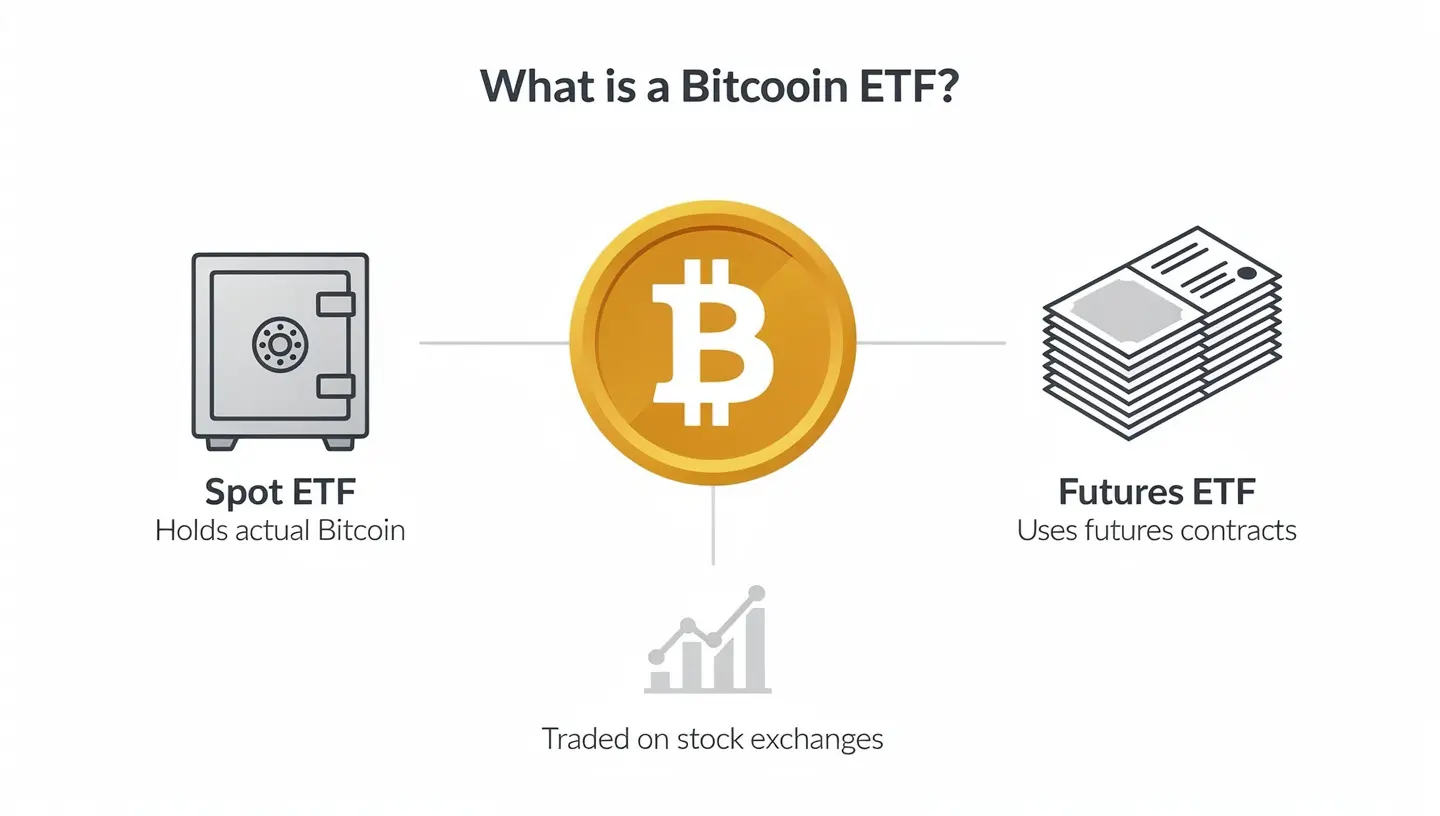
This setup matters because many investors who wanted Bitcoin exposure for years simply couldn’t access it through the accounts they already used. A Bitcoin ETF removes that barrier and packages the price movement of Bitcoin into a familiar wrapper that fits inside a normal investment portfolio, including retirement accounts in many cases. If you’re still new to the underlying asset itself, our guide on what Bitcoin is covers the basics before diving deeper into how these funds work.
How Does a Bitcoin ETF Work?
Bitcoin ETFs rely on a process called creation and redemption to keep the share price aligned with the value of the Bitcoin the fund holds. Large financial institutions, known as authorized participants, create new shares by delivering Bitcoin or cash to the fund, and they redeem shares by handing them back in exchange for the underlying assets.
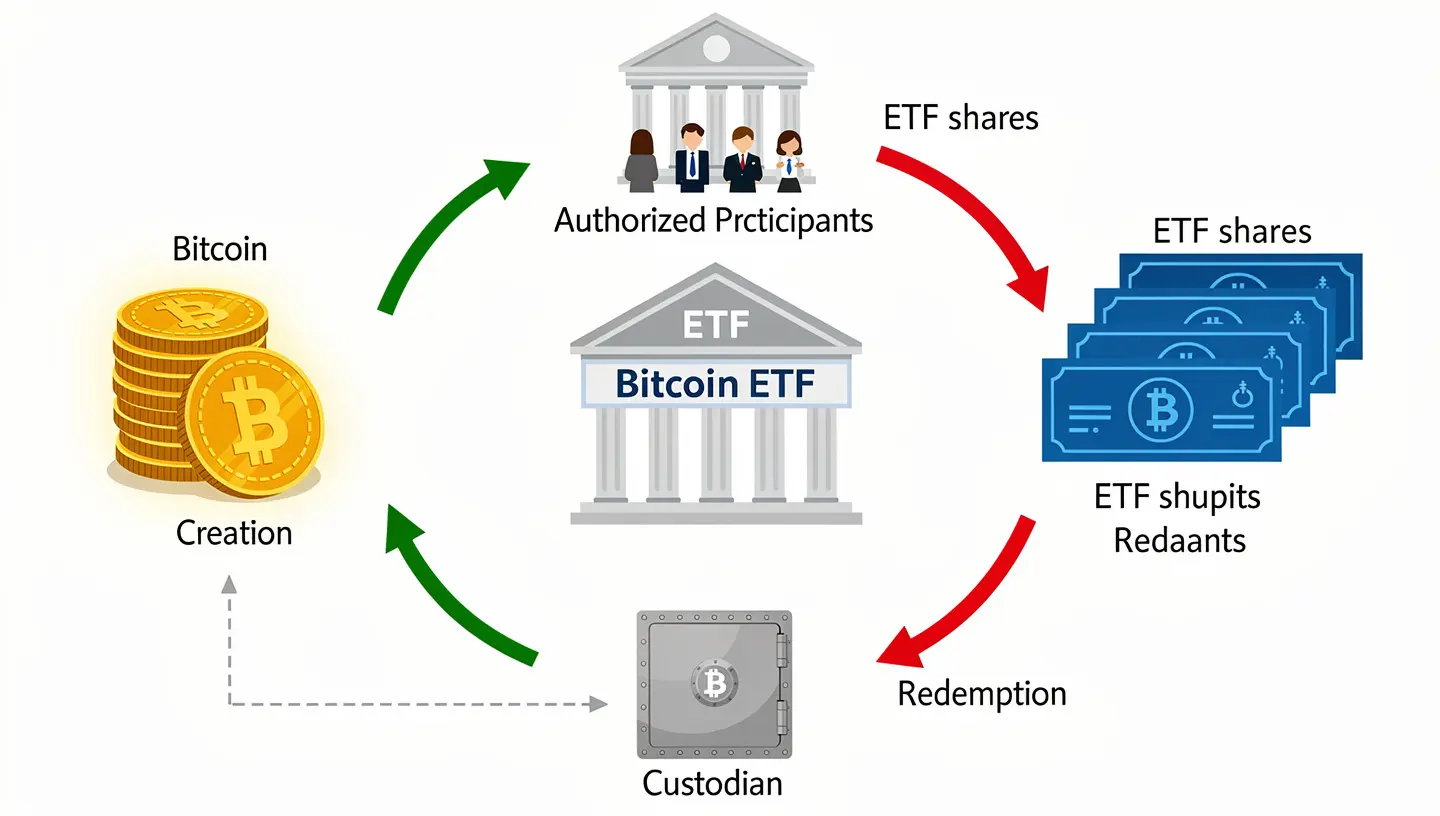
If demand pushes the ETF’s share price above the value of the Bitcoin backing it, authorized participants step in to create new shares, which increases supply and pulls the price back down. If the share price falls below that value, they redeem shares instead, shrinking supply and pushing the price back up. This constant back and forth is what keeps a well-built Bitcoin ETF tracking the underlying asset so closely, and it’s the same mechanism that keeps traditional ETFs aligned with whatever they hold.
Custody is handled by a regulated third party rather than the investor. Coinbase Custody currently holds Bitcoin for most of the larger spot funds, including BlackRock’s IBIT and Fidelity’s FBTC, which means a small number of custodians end up responsible for a large share of all the Bitcoin held across these products.
Spot Bitcoin ETF vs Bitcoin Futures ETF: Key Differences
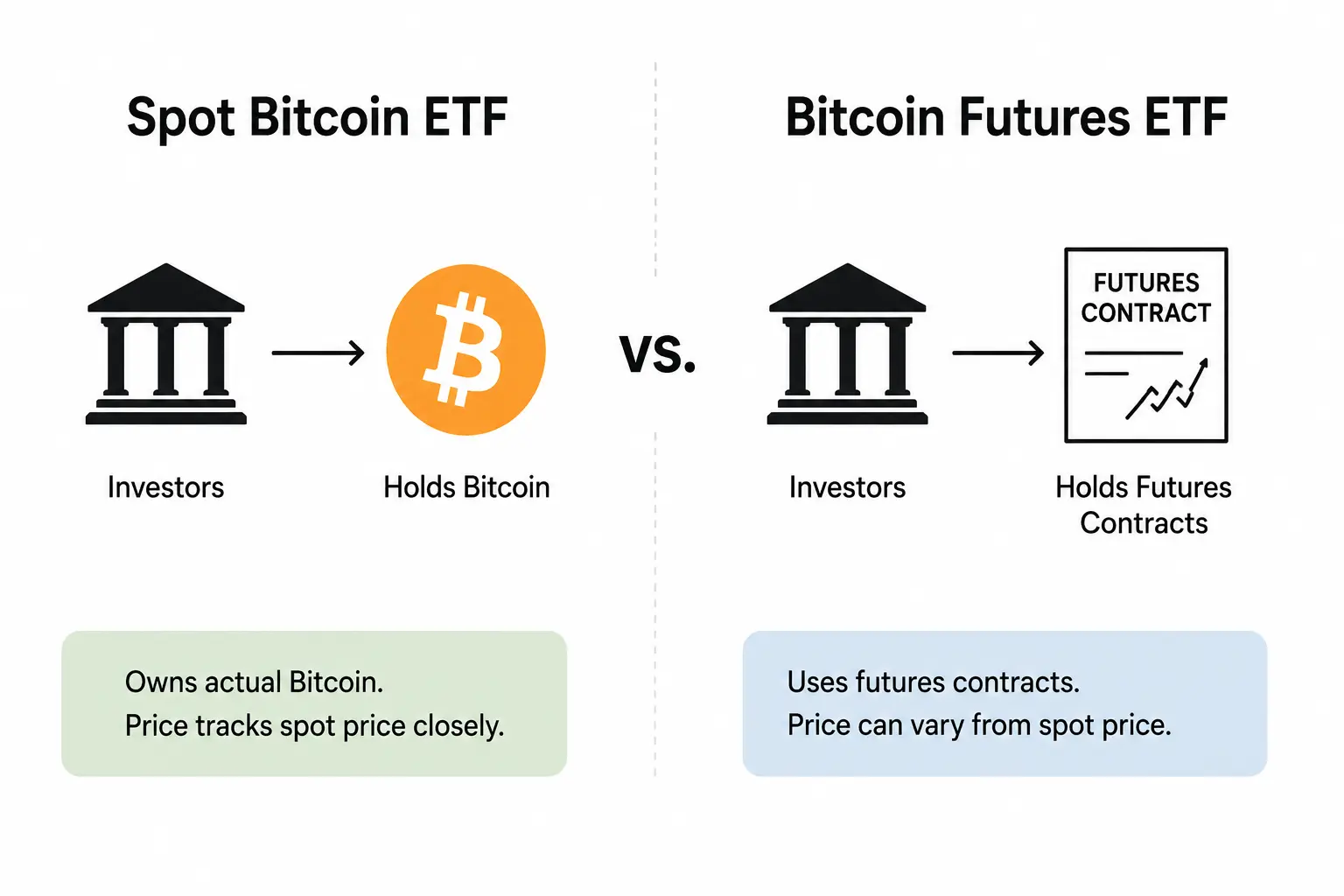
Not every Bitcoin ETF works the same way underneath. The fund either holds actual Bitcoin, or it holds contracts tied to Bitcoin’s future price, and that single difference shapes how closely the share price tracks the market, what fees you pay, and how the fund behaves over time.
| Feature | Spot Bitcoin ETF | Bitcoin Futures ETF |
|---|---|---|
| What the fund holds | Actual Bitcoin in custody | Bitcoin futures contracts |
| Price tracking | Closely follows Bitcoin’s spot price | Can deviate due to contango or backwardation |
| Roll costs | None | Charged when contracts are rolled before expiry |
| First approved | January 2024 | October 2021 |
| Typical expense ratio | 0.19% to 0.90% | 0.70% to 1.50% |
What Is a Spot Bitcoin ETF?
A spot Bitcoin ETF holds actual Bitcoin as its underlying asset. For every share issued, there’s a corresponding amount of Bitcoin sitting with a custodian, so the fund’s value is tied directly to how much Bitcoin it owns and what that Bitcoin is currently worth. When Bitcoin rises ten percent, a spot ETF should rise roughly the same amount, minus the small management fee the fund charges. This is the type most people picture when they hear the term Bitcoin ETF today, and it offers the most direct price exposure available through a brokerage account.
What Is a Bitcoin Futures ETF?
A Bitcoin futures ETF doesn’t hold Bitcoin at all. Instead, it holds futures contracts, agreements to buy or sell Bitcoin at a set price on a future date, traded on a regulated exchange like the CME. Because these contracts expire, the fund has to keep selling expiring contracts and buying new ones, a process called rolling. That rolling carries a cost, especially in a market condition called contango, where longer-dated contracts trade above the current price, meaning the fund effectively buys high and sells low every time it rolls. The opposite condition, called backwardation, happens when near-term demand pushes the current price above future contract prices, and it can briefly work in the fund’s favor. Over long holding periods, though, contango tends to dominate, which is part of why futures ETFs have historically lagged spot Bitcoin’s actual return.
Bitcoin Income (Covered-Call) ETFs
A newer category has emerged that isn’t built to track Bitcoin’s price as closely as possible, but instead to generate steady income. These funds typically hold Bitcoin exposure through a spot position, then sell options against it and pass the premiums collected on to shareholders as regular payouts. The tradeoff is that selling those options caps how much of a sharp rally the fund can capture, so an investor gets a more predictable income stream but gives up some of the upside a plain spot fund would have delivered in a strong bull run. This structure tends to suit someone who wants yield from their Bitcoin position and expects a choppier or more moderate market rather than wanting full exposure to every dollar Bitcoin might gain.
SEC Approval and the History of Bitcoin ETFs
The idea of a Bitcoin ETF in the United States goes back further than most people realize. Cameron and Tyler Winklevoss filed the first spot Bitcoin ETF application with the SEC all the way back in 2013, and it was rejected, along with more than twenty other applications that followed over the next decade from firms including Fidelity, Grayscale, VanEck, and WisdomTree.
Other countries moved faster. Canada approved the Purpose Bitcoin ETF and the Evolve Bitcoin ETF in 2021, marking the world’s first physically backed Bitcoin spot funds, well before American regulators budged. In the United States, the first product to actually launch was a futures based fund in October 2021, since the SEC had signaled it was more comfortable with contracts tied to a regulated futures market than with funds holding Bitcoin directly. To understand why this distinction mattered so much to regulators, our explainer on what a private key is covers the custody concerns that shaped years of rejected applications.
That changed on January 10, 2024, when the SEC approved eleven spot Bitcoin ETFs at once, following Grayscale’s successful legal challenge against the agency the previous year. The approval ended more than a decade of rejected filings and is widely seen as one of the most significant moments in the asset’s history toward mainstream acceptance. Within months, these funds had pulled in tens of billions of dollars from pension funds, brokerages, and individual investors who finally had a regulated way in.
Major Bitcoin ETFs and Tickers
A handful of issuers dominate the spot Bitcoin ETF market, and fees between them vary more than you might expect for products that are tracking the exact same asset.
| Fund | Ticker | Issuer | Type | Expense Ratio |
|---|---|---|---|---|
| iShares Bitcoin Trust | IBIT | BlackRock | Spot | 0.25% |
| Wise Origin Bitcoin Fund | FBTC | Fidelity | Spot | 0.25% |
| ARK 21Shares Bitcoin ETF | ARKB | ARK Invest / 21Shares | Spot | 0.21% |
| Bitwise Bitcoin ETF | BITB | Bitwise | Spot | 0.20% |
| Franklin Bitcoin ETF | EZBC | Franklin Templeton | Spot | 0.19% |
| Grayscale Bitcoin Trust | GBTC | Grayscale | Spot | 1.50% |
That gap between a 0.19% expense ratio and a 1.50% one isn’t trivial. On a $100,000 position, the difference works out to over a thousand dollars a year, money that quietly compounds the longer you hold the fund. For anyone weighing how this fits alongside other parts of a portfolio, our piece on market cap in crypto explains how fund size and asset value connect when comparing investment products like these.
Advantages of Bitcoin ETFs
No wallet or private key needed. You buy and sell shares through the same brokerage account you already use for stocks, with no seed phrases to write down and no risk of losing access because a wallet was set up incorrectly.
Custody handled by professionals. The fund’s custodian takes on the responsibility of securing the underlying Bitcoin, which removes the burden of self-custody for investors who would rather not manage that themselves.
Access for institutions and retirement accounts. Many pension funds, endowments, and retirement accounts can only hold regulated securities, not crypto held directly, so the ETF wrapper opened Bitcoin exposure to an enormous pool of capital that had been locked out before.
Familiar trading infrastructure. Shares settle like any other security, fit into existing brokerage reporting, and trade with the liquidity of established stock exchanges rather than requiring a separate crypto exchange account.
Risks and Disadvantages of Bitcoin ETFs
Owning a Bitcoin ETF means owning shares in a fund, not Bitcoin itself, and that distinction carries real consequences. You can’t send the Bitcoin to anyone, use it in decentralized applications, or withdraw it to your own wallet, since individual investors never have a direct claim on the underlying coins the way a self-custody holder does.
Fees add up over time too. Even a low cost spot fund charges an annual expense ratio that quietly chips away at returns compared to holding Bitcoin with no ongoing fee at all. Futures ETFs face an additional drag from tracking error, since rolling contracts in a contango market can cause a fund to noticeably underperform Bitcoin’s actual price over a long holding period.
There’s also custodial risk to consider. A small number of custodians, Coinbase Custody chief among them, hold the Bitcoin backing most major spot funds, which means a security failure or operational issue at one custodian could affect several funds at once. And because ETF shares trade only during stock market hours, typically 9:30 AM to 4:00 PM Eastern time, investors can’t react if Bitcoin’s price moves sharply over a weekend or overnight, something that happens often given the asset trades around the clock everywhere else.
Bitcoin ETF vs Holding Bitcoin Directly
| Consideration | Bitcoin ETF | Self-Custody |
|---|---|---|
| What you own | Shares in a fund | Bitcoin directly |
| Custody | Fund’s custodian | Your own wallet and private keys |
| Ongoing cost | Annual expense ratio | Network fees per transaction only |
| Trading hours | Stock market hours only | Available around the clock |
| Onchain usage | Not possible | Send, receive, or use in applications |
Holding Bitcoin yourself means you control the private keys and own the asset outright, with no intermediary standing between you and your coins. The tradeoff is responsibility: you have to secure that wallet yourself, and losing access usually means losing the funds permanently, with no customer support line to call. An ETF removes that burden entirely but hands control of the underlying asset to someone else. Plenty of investors end up using both, an ETF for simple portfolio exposure and direct ownership for the Bitcoin they actually want to control. For a deeper look at how that ownership model works at a technical level, see our guide on how Bitcoin works.
How to Buy a Bitcoin ETF
Buying a Bitcoin ETF follows the same steps as buying any other stock or fund through a brokerage account.
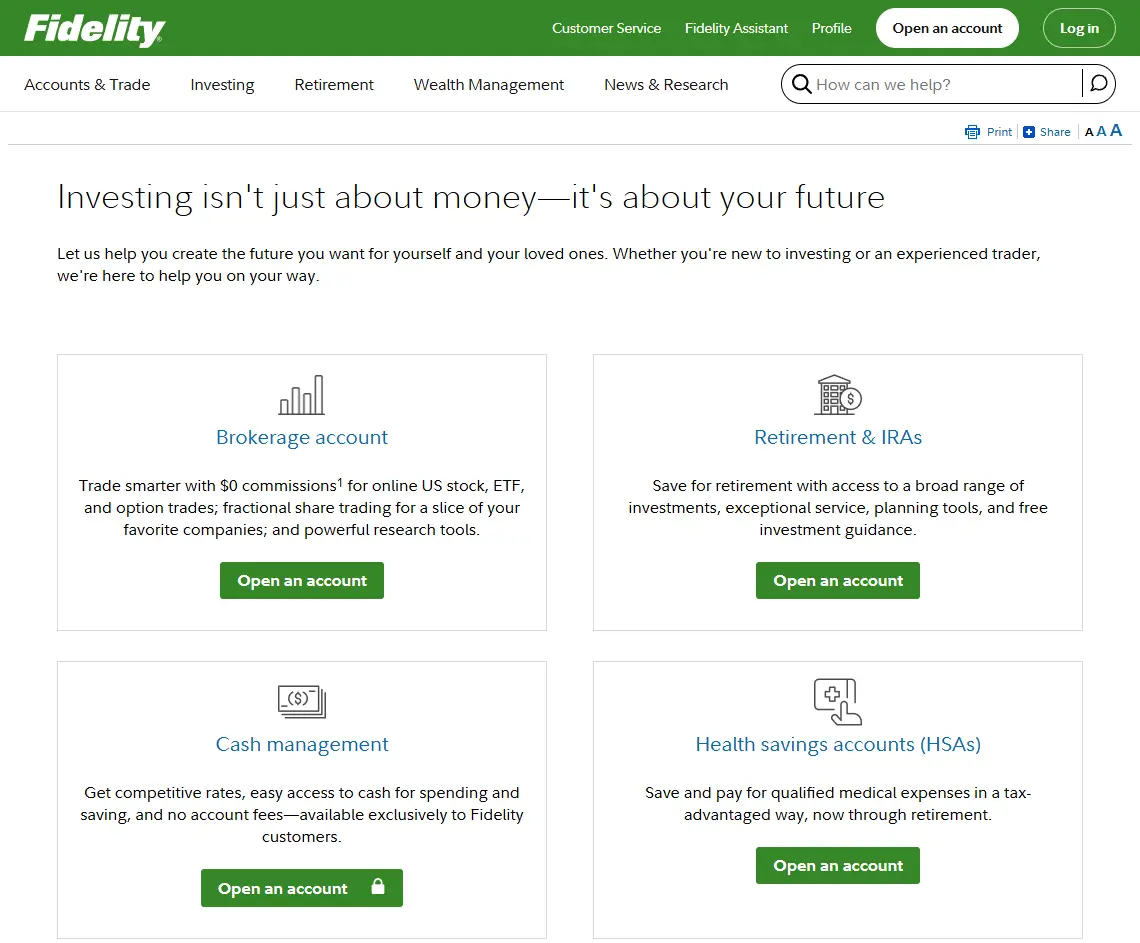
- Open or use an existing brokerage account with a platform that lists the ETF you want, such as Fidelity, Schwab, or a similar broker
- Search for the fund by its ticker symbol, for example IBIT or FBTC
- Decide how many shares to buy based on the current share price
- Place the order during regular stock market hours and confirm the trade
- Monitor the fund’s price relative to its net asset value over time, since a large premium can mean you’re paying more than the underlying Bitcoin is actually worth
For anyone weighing this against buying the asset outright through a crypto exchange instead, our comparison of what a crypto exchange is walks through how that process differs from a standard brokerage purchase. Knowing the bigger picture of how Bitcoin’s own scarcity schedule affects long term value can also be useful here, and our piece on Bitcoin halving covers how that supply mechanism works.
Bitcoin ETF FAQ
What Is a Bitcoin ETF in Simple Terms?
A Bitcoin ETF is an exchange-traded fund that gives you exposure to Bitcoin’s price through a regular brokerage account, without needing to buy, store, or secure actual Bitcoin yourself. The fund holds the Bitcoin or Bitcoin-related contracts, and your shares move with Bitcoin’s price.
What Is the Difference Between a Spot and a Futures Bitcoin ETF?
A spot Bitcoin ETF holds actual Bitcoin, so its share price tracks Bitcoin’s market price directly. A futures Bitcoin ETF holds futures contracts instead, which can drift away from Bitcoin’s actual price due to contango and the cost of rolling expiring contracts.
Can I Withdraw Bitcoin From an ETF to My Own Wallet?
No. Individual shareholders cannot redeem ETF shares for actual Bitcoin. Only authorized participants, typically large financial institutions, can create or redeem shares directly with the fund in exchange for the underlying asset.
Are Bitcoin ETFs Available Outside the United States?
Yes. Spot Bitcoin ETFs and similar exchange-traded products already exist in Canada, where they launched ahead of the United States, along with several European markets and other jurisdictions, though availability and structure vary by country.
Do Bitcoin ETFs Pay Dividends?
Standard spot and futures Bitcoin ETFs do not pay dividends, since Bitcoin itself doesn’t generate yield or interest. Any return comes purely from price changes. Income style ETFs are the exception, since they generate payouts by selling options against their Bitcoin exposure.
How Do I Buy a Bitcoin ETF?
You buy a Bitcoin ETF through a standard brokerage account the same way you would buy a stock, by searching for the ticker symbol and placing an order during market hours. No crypto wallet or exchange account is required.