Bitcoin is a digital currency that no government issues and no bank controls. It runs on a network of computers spread across the world, and every transaction is recorded on a shared public ledger that anyone can check. The total number of bitcoins that will ever exist is fixed at 21 million, written into the code when the network launched in 2009. No central authority can change that number.
This guide explains what Bitcoin is, who created it, how it works, what makes it different from regular money, and what you need to know before buying any.
- Bitcoin is a digital currency that no government or bank issues or controls
- It runs on a public ledger called the blockchain, maintained by a network of computers worldwide
- The total supply is permanently capped at 21 million coins
- Bitcoin was created in 2008 by a person or group using the name Satoshi Nakamoto
- It is the first and largest cryptocurrency by market capitalisation
What is Bitcoin?
Bitcoin is a form of digital money that can be sent directly from one person to another over the internet, without a bank or payment processor in the middle. It was the first cryptocurrency, and it remains the largest by market capitalisation. The abbreviation is BTC, and the symbol is ₿.
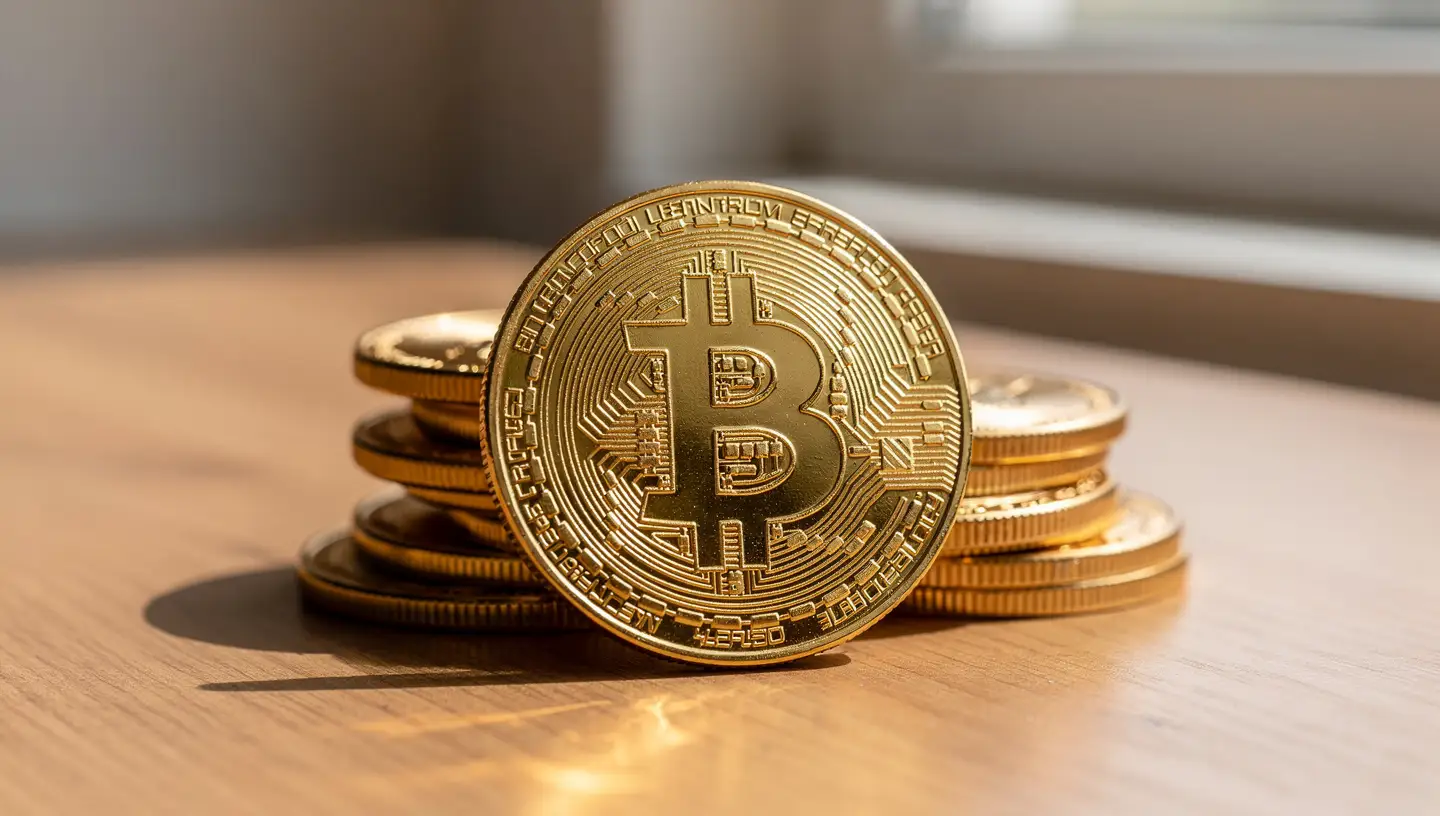
Unlike the dollars in a bank account, bitcoin is not issued or backed by any government or central bank. No single institution controls the supply. The rules that govern how new coins are created and how transactions are confirmed are written into the software itself. Those rules run on thousands of computers around the world, and changing them requires the agreement of the network, not a decision by any one person or organisation.
Bitcoin is also decentralised. That word comes up constantly in crypto, and in Bitcoin’s case it means no single computer, company, or country runs the network. If one node goes offline, the rest of the network continues without it. No government can shut it down by disabling a single server, and no institution can freeze a bitcoin balance without access to the private key that controls it.
The technology that makes all of this possible is called the blockchain. Every bitcoin transaction ever made is recorded there, in order, and that record cannot be changed after the fact.
Who created Bitcoin?
Bitcoin was created by a person or group using the name Satoshi Nakamoto. In October 2008, Nakamoto published a nine-page paper titled “Bitcoin: A Peer-to-Peer Electronic Cash System.” That paper described a method for sending digital payments directly between two people without any financial institution involved. It solved a problem that had defeated previous attempts at digital cash: how to stop someone from spending the same coin twice without relying on a trusted third party to check.
On 3 January 2009, Nakamoto mined the first block on the Bitcoin network. That block, known as the genesis block, contained a message referencing a newspaper headline about bank bailouts. On 12 January 2009, Nakamoto sent 10 bitcoins to programmer Hal Finney in the first recorded Bitcoin transaction.
By the end of 2010, Nakamoto had handed control of the Bitcoin code to other developers and disappeared from public view. The identity has never been confirmed. The name could belong to one person or several. Nakamoto’s original wallets hold roughly one million bitcoins that have never been moved.
You can read the full story of how Bitcoin developed from that point in our guide to Bitcoin history: from $0 to all-time highs.
How does Bitcoin work?
Bitcoin works through a combination of three things: a shared public ledger called the blockchain, a transaction verification process called mining, and a cryptographic system of keys that establishes ownership. Together they allow two people who have never met to exchange value without trusting each other or relying on a bank to confirm the transaction.
The blockchain
The blockchain is a public record of every bitcoin transaction ever made. It is stored simultaneously on thousands of computers around the world, and every copy is identical. When a new transaction is added, every copy updates at the same time.
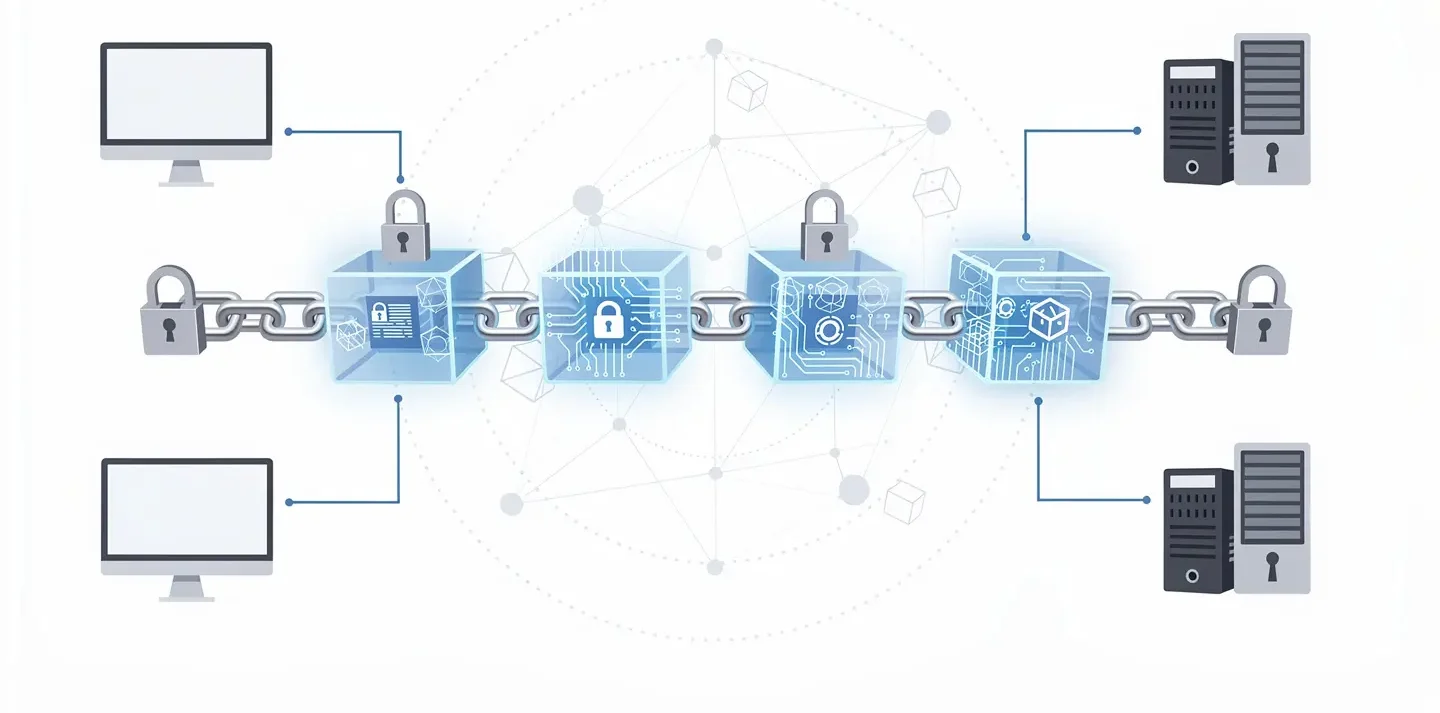
Transactions are grouped into blocks. Each block is linked to the one before it using a cryptographic code called a hash. Change anything in an old block and the hash changes, which breaks its connection to every block that followed. The network rejects the altered version. This structure is what makes the blockchain effectively permanent once transactions are confirmed.
For a full explanation of how blockchain technology works, see our guide to what is blockchain technology and how does it work.
Bitcoin mining and proof of work
Bitcoin mining is the process by which new transactions are verified and added to the blockchain. Computers on the network, called miners, compete to solve a mathematical puzzle. The first miner to solve it earns the right to add the next block of transactions and receives a reward in newly created bitcoin. This process is called proof of work.
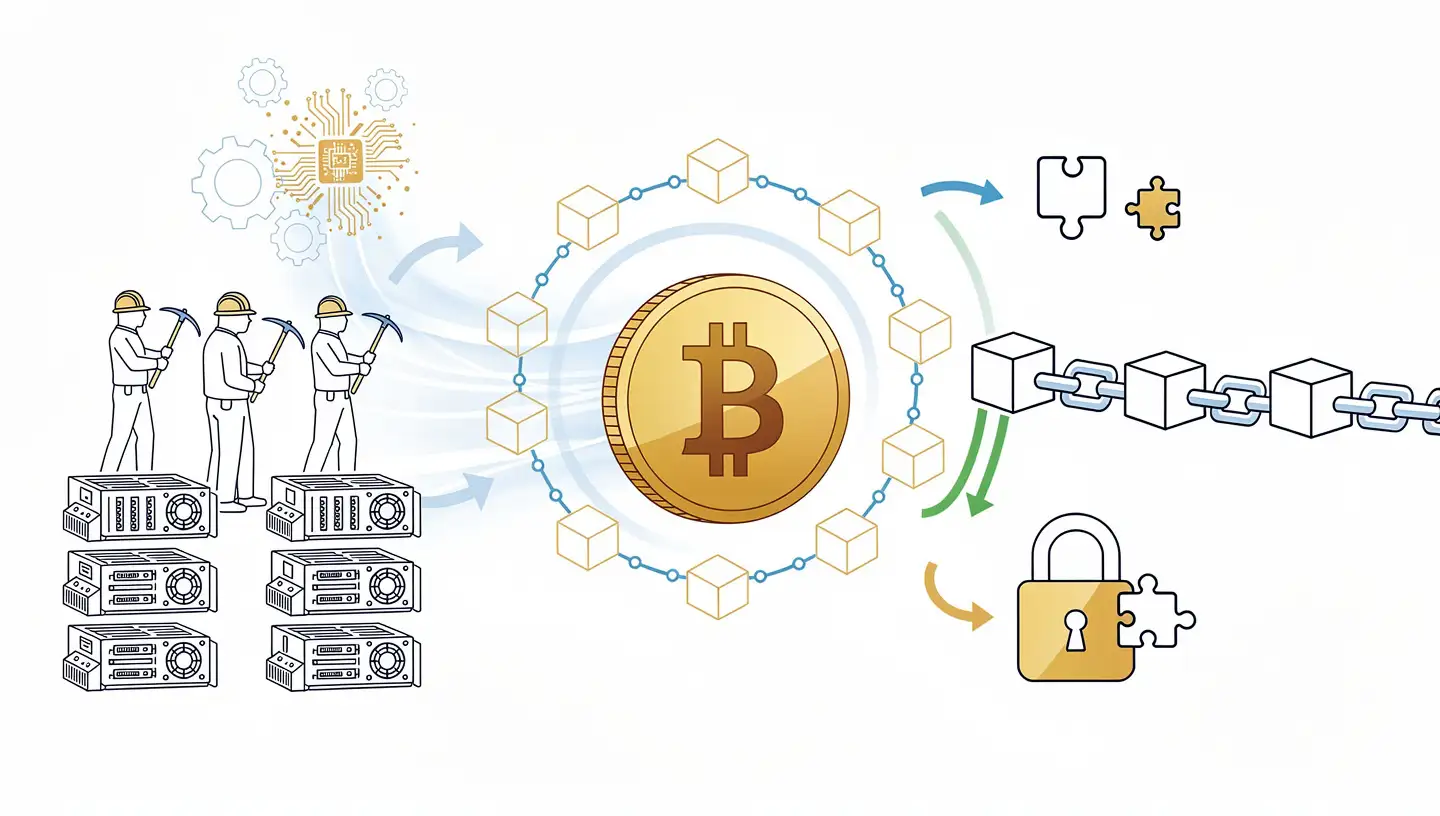
The puzzle is deliberately difficult. Solving it requires significant computing power and electricity. That cost is intentional: it makes it economically impractical for anyone to falsify a transaction, because rewriting old records would require redoing all the work from that point forward, faster than the rest of the network is moving.
The reward miners receive for adding a block is cut in half roughly every four years, in an event called the halving. Bitcoin was last halved in April 2024, reducing the block reward to 3.125 BTC. This mechanism controls the rate at which new bitcoin enters circulation and is built into the protocol permanently.
Public and private keys
Ownership of bitcoin is established through cryptography. Every bitcoin address comes with two keys: a public key, which works like an account number that others can send bitcoin to, and a private key, which works like a password that authorises outgoing transactions.
In crypto, a private key is the only proof of ownership that matters. Anyone who has your private key controls your bitcoin. Anyone who loses their private key loses access to their bitcoin permanently. There is no reset button and no customer service number. This is the most important practical fact about Bitcoin that every beginner needs to understand before holding any.
What makes Bitcoin different from regular money?
The money in a bank account is fiat currency. The word “fiat” means it has value because a government says it does and because people accept it. A central bank manages the supply, which means it can print more when it chooses. The US Federal Reserve, the European Central Bank, and similar institutions make those decisions.
Bitcoin works differently at almost every level. The comparison below covers the main differences. For a full side-by-side, see our guide to fiat currency vs crypto.
| Feature | Fiat currency (e.g. US dollar) | Bitcoin (BTC) |
|---|---|---|
| Issued by | Government / central bank | Software algorithm |
| Supply control | Central bank can expand supply | Fixed at 21 million, set in code |
| Who confirms transactions | Banks and payment processors | Network of miners and nodes |
| Can your balance be frozen? | Yes, by your bank or a court | No, if you hold your own keys |
| Physical form | Notes and coins | No physical form |
| Settlement time | 1 to 3 business days | 10 minutes to 1 hour |
| Open 24/7 | No | Yes |
One clarification worth making: most countries do not recognise Bitcoin as legal tender. Businesses are generally not required to accept it. Its legal status varies by country, and tax treatment varies as well. That does not make it illegal in most places, but it does mean its acceptance as a payment method depends on the individual merchant.
What is the 21 million supply cap?
No more than 21 million bitcoins will ever exist. That limit is written into Bitcoin’s code and has been in place since the network launched. As of early 2025, about 19.7 million bitcoins have already been mined. The remaining coins will be released gradually through the mining process over the coming decades, with the last bitcoin expected to be mined around the year 2140.
The rate at which new bitcoin enters circulation is controlled by the halving. Every 210,000 blocks, roughly every four years, the reward miners receive for adding a new block is cut in half. The schedule of halvings looks like this:
- 2009: Block reward was 50 BTC
- 2012: Halved to 25 BTC
- 2016: Halved to 12.5 BTC
- 2020: Halved to 6.25 BTC
- 2024: Halved to 3.125 BTC
This predictable, shrinking supply schedule is one of the reasons Bitcoin is often compared to gold. Gold is scarce because the earth contains a finite amount of it. Bitcoin is scarce because its code says it will be. The difference is that Bitcoin’s scarcity is mathematically enforced and cannot be changed without the agreement of the entire network, which in practice means it cannot be changed at all.
The market capitalisation of Bitcoin, meaning the total value of all coins in circulation, is tracked as one of the key indicators of Bitcoin’s size relative to other assets. You can read how market cap is calculated in our guide to what is market cap in crypto.
What are the properties of Bitcoin?
Coinbase and other exchanges describe Bitcoin’s properties in terms of what it can do that traditional payment systems cannot. These are the most relevant ones for a beginner:
- Global. Bitcoin can be sent to anyone with a wallet address, anywhere in the world, at any time. The transfer takes the same amount of time whether the recipient is in the same city or on another continent.
- Irreversible. Once a Bitcoin transaction is confirmed on the blockchain, it cannot be reversed. This is different from a credit card payment, which can be charged back. For merchants this reduces fraud risk. For buyers it means mistakes cannot be undone.
- Pseudonymous. Bitcoin transactions do not contain the names of the parties involved. They reference wallet addresses. However, those addresses and their transaction histories are fully public on the blockchain. Anyone who links a wallet address to a real identity can trace all activity from that address.
- Secure. The Bitcoin network has been running continuously since January 2009 without the blockchain itself being successfully altered. The combination of cryptography and proof of work makes falsifying past transactions computationally impractical.
- Open. The Bitcoin software is open source. Anyone can read the code, run a node, or propose changes. No company owns Bitcoin and no company can take it private.
- Divisible. One bitcoin is divisible to eight decimal places. The smallest unit is called a satoshi, named after the creator. There are 100 million satoshis per bitcoin, which means you can buy a fraction of a bitcoin for a few dollars.
Is Bitcoin digital gold?
The comparison to gold comes up in almost every serious discussion of Bitcoin, and it is worth examining rather than just repeating.
Gold has been used as a store of value for thousands of years because of specific properties: it is scarce, durable, portable, divisible, and widely recognised. Bitcoin shares several of those properties, and in some cases improves on them. Its supply is more limited and more predictable than gold’s. It is more portable. It is easier to verify and harder to counterfeit.
Where it falls short relative to gold is track record. Gold’s use as a store of value spans millennia. Bitcoin’s spans roughly 15 years. It has also been significantly more volatile, which undermines the “store of value” thesis in the short term even if the long-term direction has been upward.
Deutsche Bank Research, Fidelity Digital Assets, and other institutional analysts have used the “digital gold” framing formally in their research. BlackRock, the world’s largest asset manager, recommended in December 2024 that investors consider a small Bitcoin allocation as a diversifying asset, similar in some ways to how gold functions in a portfolio.
Whether Bitcoin becomes a long-term store of value in the way gold is depends on adoption, regulatory treatment, and whether it continues to hold value through future market cycles. As of now, the comparison is a framework, not a certainty.
What can you do with Bitcoin?
The uses for Bitcoin have expanded considerably since 2009, though most people who hold it today do so as an investment rather than a currency.
- Store of value. Holding bitcoin with the expectation that it will be worth more in the future. This is by far the most common reason people buy it today.
- Payments. Sending money to anyone in the world without a bank, in minutes, for lower fees than a wire transfer. Particularly useful for cross-border payments where traditional banking fees and processing times are significant.
- Investment through ETFs. In January 2024, the US Securities and Exchange Commission approved spot Bitcoin ETFs, which allow investors to gain exposure to Bitcoin’s price through a traditional brokerage account without holding the coins directly. As of 2025, spot Bitcoin ETFs collectively held over 1.2 million BTC.
- Purchasing goods and services. A growing number of businesses accept Bitcoin directly. Companies including Microsoft and Expedia have accepted it at various points.
How do you buy Bitcoin?
The most common way to buy Bitcoin is through a cryptocurrency exchange. You create an account, verify your identity, deposit money from a bank account, and then buy bitcoin at the current market price. The process is similar to opening a brokerage account.
When choosing an exchange, the main factors to consider are fees, security history, the range of payment methods accepted, and whether the exchange is regulated in your country. Coinbase, Kraken, and Binance are among the most widely used globally. You can compare them in our guide to the best crypto exchanges.
An alternative for people who want exposure to Bitcoin’s price without holding it directly is a Bitcoin ETF. ETFs trade on stock exchanges and are held in standard brokerage accounts, which removes the need to manage wallets and private keys. The tradeoff is that you do not own the bitcoin itself.
How do you store Bitcoin?
When you buy Bitcoin on an exchange, the coins are held in the exchange’s wallet on your behalf. That is convenient, but it means the exchange controls the private keys, not you. If the exchange is hacked or goes bankrupt, your funds are at risk.
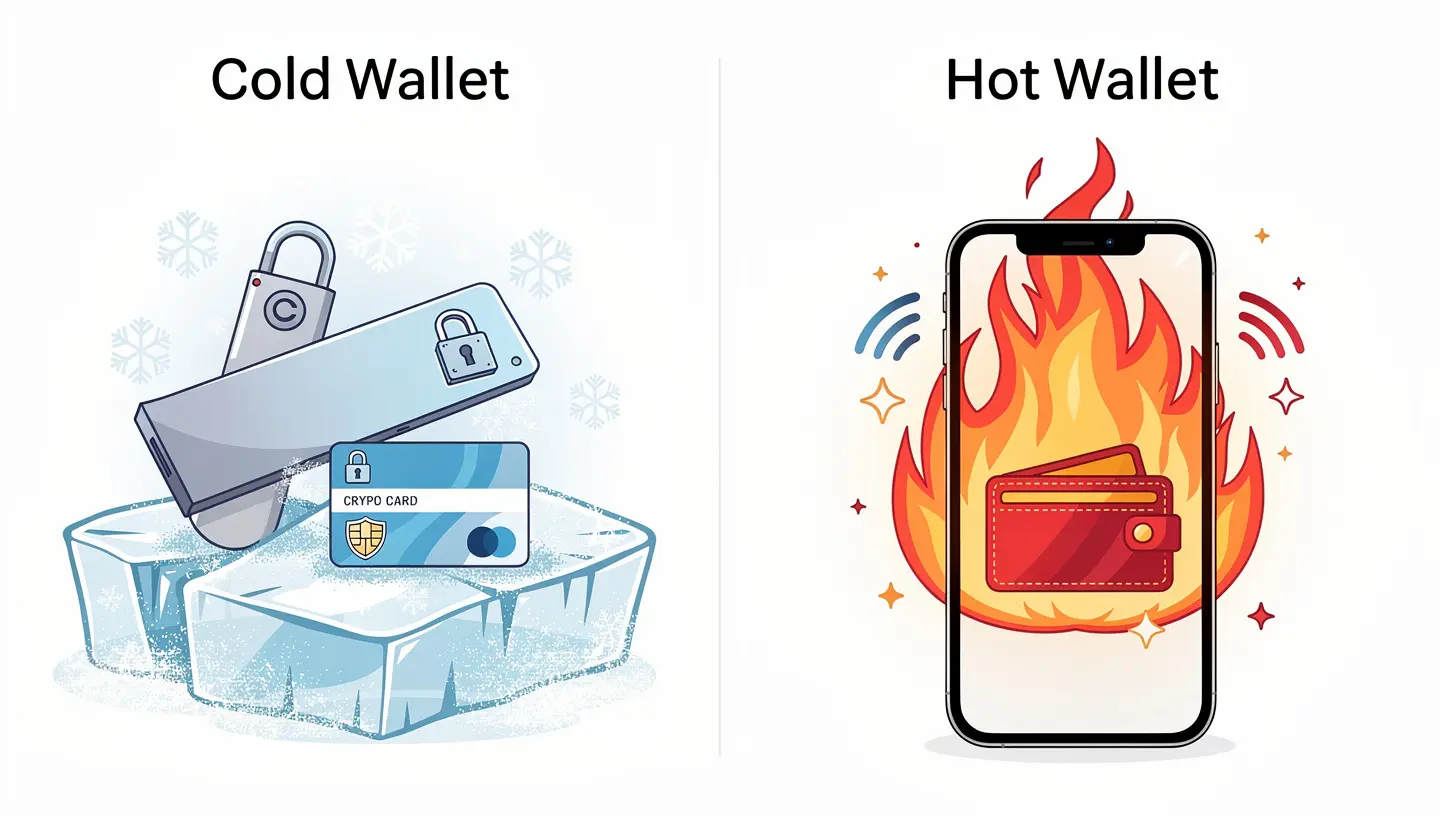
The alternative is a bitcoin wallet you control. Wallets come in two main types:
- Hot wallets are software applications on a phone or computer that are connected to the internet. They are convenient for regular use but more vulnerable to hacking than offline alternatives.
- Cold wallets (also called hardware wallets) are physical devices that store the private key offline. They are the most secure option for any meaningful amount of bitcoin. Examples include Ledger and Trezor devices.
The most important rule for anyone holding their own bitcoin: write down your seed phrase (the 12 or 24 words that back up the wallet) and store it somewhere secure and offline. Anyone who has the seed phrase controls the wallet. Anyone who loses it and loses access to the device loses the bitcoin permanently.
You can read how wallets work, the differences between types, and how to set one up in our guide to what is a crypto wallet.
What are the risks of investing in Bitcoin?
Bitcoin is a high-risk asset. Its price has dropped more than 80 percent from its peak on three separate occasions in its history, and smaller coins have gone further. Anyone putting money into Bitcoin should understand these risks before doing so.
Volatility. Bitcoin’s price moves sharply and quickly. It has gained hundreds of percent in a single year and lost the same in the next. If you need the money within a few years, or cannot afford to lose what you put in, Bitcoin is not an appropriate place for it.
Loss of access. If you lose your private key or seed phrase, there is no recovery. Fidelity estimates that around 20 percent of all bitcoins are permanently inaccessible due to lost keys. This is unique to self-custody crypto and has no equivalent in traditional finance.
Scams and fraud. Crypto attracts a significant number of scams, including fake exchanges, phishing attacks, and social engineering attempts where someone tries to get you to reveal your private key. If someone asks for your private key for any reason, it is a scam.
Regulatory risk. The legal and tax treatment of Bitcoin varies by country and is still changing. New regulations can affect prices significantly. China banned crypto mining in 2021 and Bitcoin dropped roughly 50 percent in the following weeks. Holding Bitcoin means accepting that the rules in your jurisdiction could change.
Irreversibility. Bitcoin payments cannot be reversed. If you send bitcoin to the wrong address, or to a scammer, it is gone. There is no dispute resolution process and no chargeback.
How is Bitcoin taxed?
In most countries, Bitcoin is treated as a capital asset rather than a currency for tax purposes. In the United States, the IRS classifies bitcoin as property. That means selling, swapping, or spending bitcoin is a taxable event, and the difference between what you paid and what you received is a capital gain or loss.
Buying bitcoin and holding it without selling is not taxable in most jurisdictions. But every time you sell, trade for another cryptocurrency, or spend it on a purchase, a taxable event occurs. This catches many beginners off guard, especially people who trade frequently between coins.
Tax rules vary significantly by country and are updated regularly. If you are unsure how Bitcoin is treated where you live, a tax professional who has experience with digital assets is the most reliable source before you start trading actively. Nothing in this guide is tax advice.
The bottom line
Bitcoin is a genuinely new kind of financial asset. It is the first currency in history with a fully predictable, fixed supply that no single authority controls. Whether that makes it a revolutionary store of value or a speculative instrument depends on whom you ask, and the honest answer is that both things can be true at the same time.
What it is not is simple. The technology behind it requires some effort to understand. The risks of holding it are real and specific to crypto in ways that traditional investments are not. And the price swings that come with it are not for everyone.
If you are just starting out, the two most useful next steps are understanding what altcoins are and how Bitcoin compares to the rest of the market. That is covered in our guide to what is an altcoin.
It is also worth understanding the difference between coins and tokens, since the two terms are often used interchangeably but mean different things technically. Our guide to crypto token vs coin explains the distinction clearly.
For further reading from primary sources, the original Bitcoin whitepaper by Satoshi Nakamoto is nine pages and remains the clearest first-principles explanation of how Bitcoin was designed to work. The US Commodity Futures Trading Commission (CFTC) Bitcoin page covers how the US government currently classifies and regulates it.
Frequently asked questions
Is Bitcoin legal?
Bitcoin is legal to buy, hold, and trade in most countries, including the United States, United Kingdom, European Union member states, Canada, and Australia. A smaller number of countries have banned or restricted it, including China, which banned cryptocurrency trading and mining in 2021. The legal status of Bitcoin varies by country, and the rules continue to change, so checking the current position in your jurisdiction is advisable before buying.
Can Bitcoin reach zero?
In theory, yes. Any asset can go to zero if demand falls to zero. In practice, Bitcoin has survived multiple crashes of more than 80 percent and recovered to new highs each time. It also has the longest track record of any cryptocurrency, a large and distributed network of miners and nodes, and growing institutional ownership. Whether any of that prevents a collapse depends on factors that cannot be predicted. You should only invest an amount you can afford to lose entirely.
How many Bitcoins are left to mine?
As of early 2025, approximately 19.7 million of the 21 million total supply have been mined. That leaves around 1.3 million bitcoins still to be released through the mining process. Due to the halving schedule, the rate of release gets slower over time. The last bitcoin is expected to be mined around the year 2140.
What is a Satoshi?
A satoshi is the smallest unit of bitcoin. There are 100 million satoshis in one bitcoin. The unit is named after Satoshi Nakamoto, the creator of Bitcoin. If bitcoin were priced at $100,000, one satoshi would be worth $0.001, or one tenth of a cent. Quoting prices in satoshis is common in the Bitcoin community, particularly for smaller transactions.
Is Bitcoin anonymous?
Bitcoin is pseudonymous, not anonymous. Transactions do not contain the names of the parties involved, only wallet addresses. However, the entire transaction history of every wallet address is fully public on the blockchain. If a wallet address is ever linked to a real identity, through an exchange’s KYC process or any other means, all transactions from that address become traceable. For that reason, Bitcoin should not be considered private in any strong sense.
What happens to Bitcoin after all 21 million are mined?
When the last bitcoin is mined around 2140, miners will no longer receive a block reward for adding new blocks. At that point, they will earn only transaction fees paid by users. Whether transaction fees alone will provide enough incentive to keep miners securing the network is an open question. The Bitcoin protocol is designed with this in mind, but whether the incentive structure holds over that time horizon depends on how transaction volumes and fees evolve over the next century.