The terms “coin” and “token” are used interchangeably across crypto news, exchange listings, and investment discussions, but they are not the same thing. Both represent digital assets that can be bought, sold, and held, but they are built differently, created through different processes, and serve different purposes. Understanding that distinction matters more than most beginners expect, particularly when deciding what to buy, which wallet to use, or how to evaluate a project.
The single most important difference is this: a coin runs on its own blockchain, while a token runs on someone else’s blockchain. Everything else follows from that.
What is a crypto coin?
A crypto coin is the native asset of a blockchain network. It is created directly by the blockchain protocol itself, not by a separate project or developer. Bitcoin (BTC) runs on the Bitcoin blockchain. Ether (ETH) runs on the Ethereum blockchain. Solana (SOL) runs on the Solana blockchain. Each of these coins is inseparable from its network.
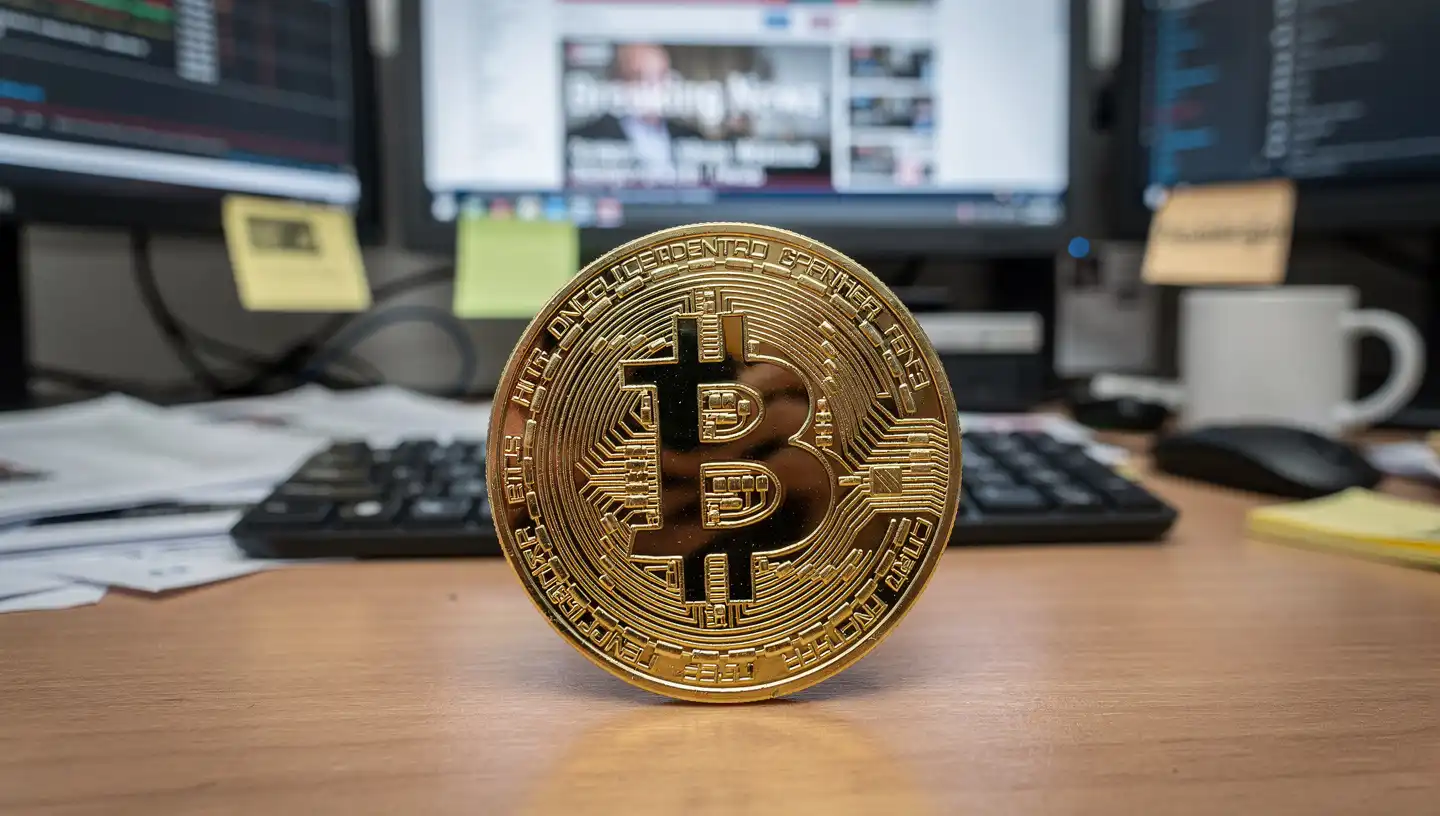
Crypto coins serve two core functions: they act as a medium of exchange for sending and receiving value between users, and they function as a store of value in the same way that gold or cash historically have. In this respect, coins behave much like traditional currencies, just in digital form with no central issuing authority.
Coins also play a structural role within their networks. They are used to pay transaction fees and to reward the participants who keep the network running. Without the native coin, a blockchain cannot function.
How coins are created
New coins come into circulation through the consensus mechanism of their respective networks. There are two main methods:
- Proof of work (PoW): Miners use computing power to solve mathematical problems and verify transaction blocks. The first miner to solve the problem receives new coins as a reward. Bitcoin and Litecoin use this method.
- Proof of stake (PoS): Validators lock up existing coins as collateral to earn the right to verify transactions. They receive new coins as rewards for doing so. Ethereum switched to proof of stake in 2022. Cardano and Solana use it as well.
In both cases, the coin supply grows gradually over time according to rules set in the protocol at launch. Bitcoin, for example, has a hard cap of 21 million coins that will ever exist. The rate at which new coins are released is predetermined and cannot be changed by any single party.
Examples of crypto coins
- Bitcoin (BTC): Bitcoin blockchain, used as digital currency and store of value
- Ether (ETH): Ethereum blockchain, used to pay fees and power smart contracts
- Solana (SOL): Solana blockchain, used to pay transaction fees
- Cardano (ADA): Cardano blockchain, used for staking and fees
- Litecoin (LTC): Litecoin blockchain, designed as faster, cheaper Bitcoin payments
- XRP: XRP Ledger, used for cross-border payments between institutions
For more on how Bitcoin specifically works as a network and why its coin is designed the way it is, see our guide on what is Bitcoin.
What is a crypto token?
A crypto token is a digital asset built on top of an existing blockchain rather than on its own. The developer of a token does not need to build a new blockchain from scratch. Instead, they write a smart contract that runs on an existing network, most commonly Ethereum, and that smart contract defines the token’s rules, supply, and behavior.
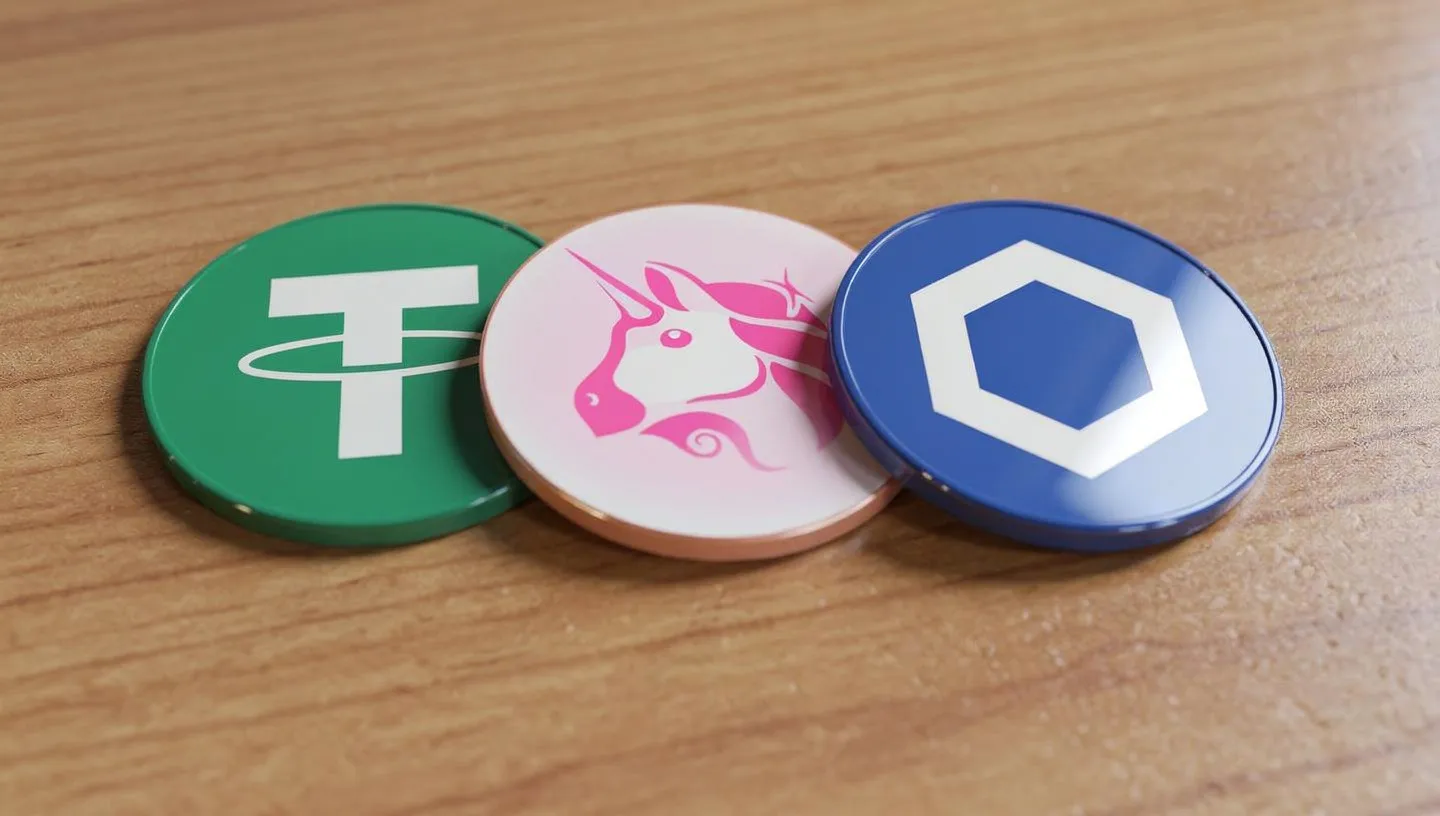
Because tokens rely on the underlying blockchain for security and transaction processing, they are faster and cheaper to create than coins. This is why thousands of tokens exist. A startup can launch a token in days without building years of infrastructure. The tradeoff is that the token depends on that blockchain’s continued operation, security, and fees.
Tether (USDT), Uniswap (UNI), Chainlink (LINK), Aave (AAVE), and Dai (DAI) are all tokens. Despite being among the most widely traded and recognized names in crypto, none of them have their own blockchain. They run primarily on Ethereum, though most are also deployed on other networks like BNB Chain, Solana, or Polygon.
How tokens are created
Tokens are created through smart contracts that follow specific token standards. Each blockchain has its own standards. On Ethereum, the most widely used is ERC-20, which covers fungible tokens, meaning all units of the token are identical and interchangeable like dollars in a bank account. The standard for non-fungible tokens (NFTs) is ERC-721, where each token is unique.
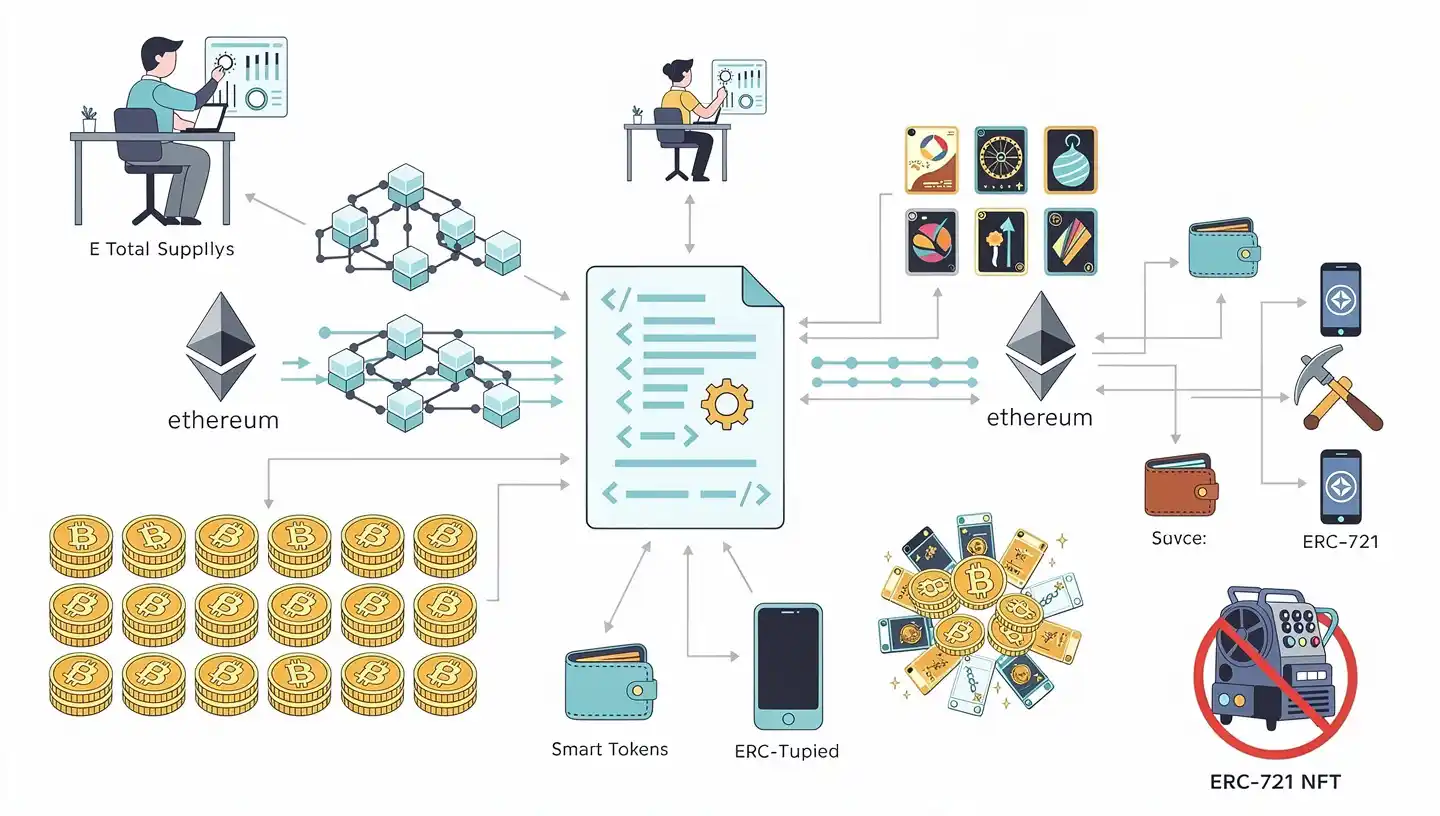
When a developer creates a token using ERC-20, for example, they define things like the total supply, the token name, and how transfers work. The token is then deployed on the Ethereum network and can be traded on any exchange or wallet that supports the ERC-20 standard. There is no mining. The full token supply is typically created all at once at launch and then distributed through various methods. Kraken’s overview of coins vs tokens covers the technical creation process in further detail.
For a broader explanation of the technology all of this is built on, see our guide on how Bitcoin works, which covers blockchain fundamentals.
Examples of crypto tokens
- Tether (USDT): stablecoin pegged to the US dollar, runs on multiple blockchains
- USD Coin (USDC): stablecoin pegged to the US dollar, backed by reserves
- Uniswap (UNI): governance token for the Uniswap decentralized exchange
- Chainlink (LINK): utility token that powers a decentralized data oracle network
- Aave (AAVE): governance token for the Aave lending protocol
- Dai (DAI): decentralized stablecoin backed by crypto collateral
The key difference between coins and tokens
The simplest way to separate the two: a coin is the foundation, a token is something built on top of that foundation. A coin powers its own network. A token uses a network that already exists.
| Feature | Coin | Token |
|---|---|---|
| Blockchain | Has its own dedicated blockchain | Runs on an existing blockchain |
| Creation | Issued by the blockchain protocol (mining or staking) | Created via smart contract by developers |
| Primary use | Currency, store of value, transaction fees | Utility, governance, representing assets |
| Supply mechanism | Released gradually over time per protocol rules | Usually created all at once at launch |
| Examples | BTC, ETH, SOL, ADA, LTC | USDT, UNI, LINK, AAVE, DAI |
| Cost to create | Requires building a full blockchain protocol | Can be deployed in hours via smart contract |
One important clarification: Ether (ETH) is often called a token in casual conversation, but it is technically a coin because it is the native asset of the Ethereum blockchain. When people refer to “ERC-20 tokens,” they mean assets built on top of Ethereum using its token standard, not Ether itself. The confusion is widespread even among experienced users, so it is worth keeping the distinction clear.
To understand what makes a cryptocurrency as a category different from other digital assets, read our guide on what is cryptocurrency.
Types of crypto tokens
Tokens can be designed to do many different things. The type of token determines its purpose, how it derives value, and what rights or access it provides to holders.
Utility tokens
Utility tokens give holders access to a product or service within a specific network. They are designed to be used, not primarily held as investments.
Filecoin (FIL), for example, is used to purchase storage space on a decentralized file storage network. Chainlink (LINK) is used to pay for data feeds from oracle nodes. Without these tokens, you cannot use the services they power.
Governance tokens
Governance tokens give holders voting rights over decisions about a protocol. Token holders can propose and vote on changes to fee structures, technical upgrades, or how a project’s treasury is spent. Uniswap (UNI) and Aave (AAVE) are governance tokens for their respective decentralized finance protocols. The idea is to put decision-making in the hands of the people who use and hold the token rather than a central company or team.
Security tokens
Security tokens represent ownership of an underlying asset, similar in concept to shares of stock or a stake in real estate. They are issued through Security Token Offerings (STOs) and in most jurisdictions are treated as regulated financial instruments. A security token could represent a fraction of commercial property, a company’s equity, or a bond. This category is growing but still relatively small compared to utility and governance tokens.
Stablecoins
Stablecoins are tokens designed to maintain a stable value, usually pegged 1:1 to a fiat currency like the US dollar. Tether (USDT) and USD Coin (USDC) are the two largest by market cap. They are backed by cash and short-term bonds held in reserve. Dai (DAI) takes a different approach: it is backed by crypto assets locked in smart contracts rather than fiat held by a company.
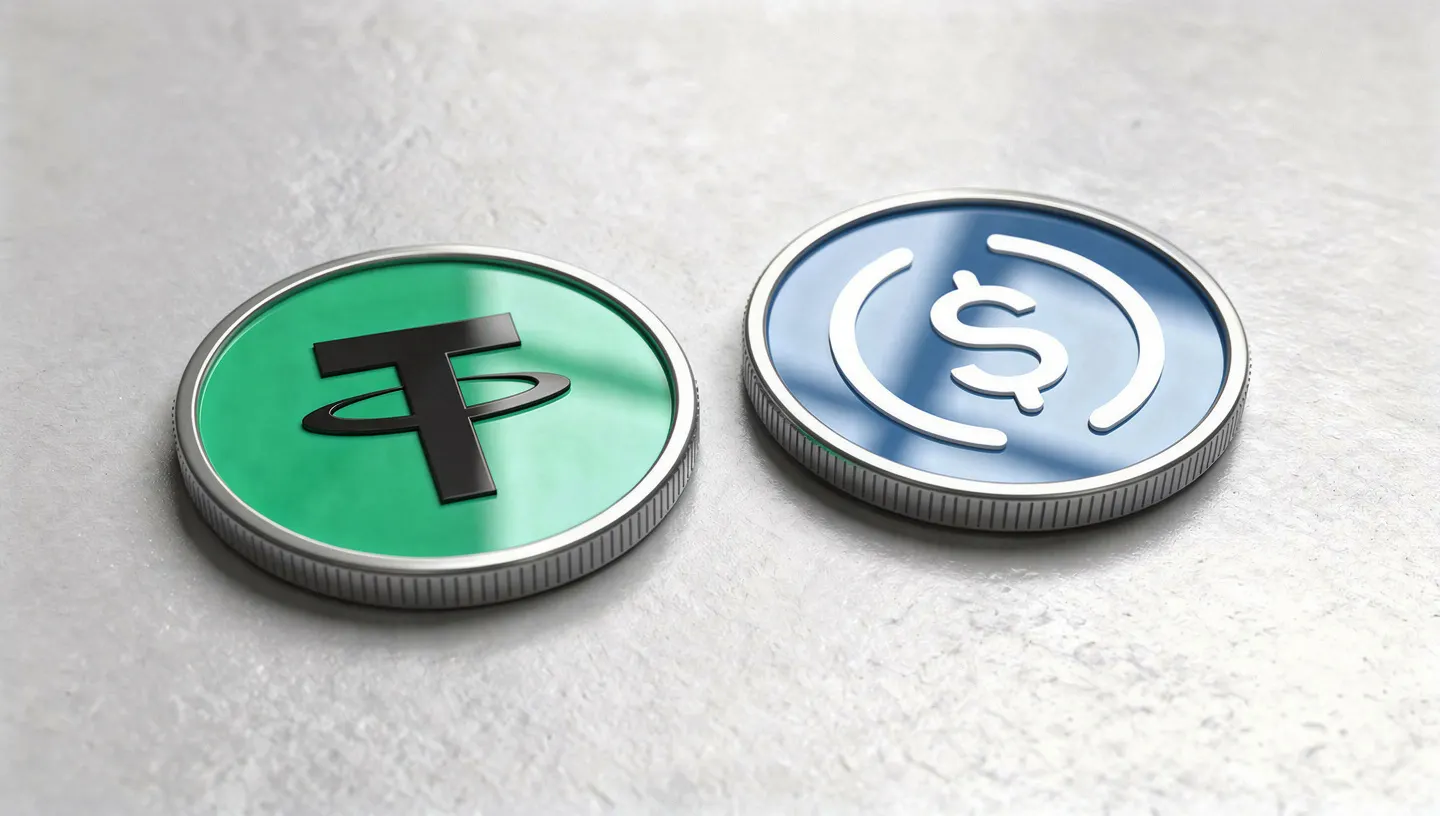
Stablecoins are widely used for trading, as a safe haven during market downturns, and for sending money without exposure to price volatility.
Non-fungible tokens (NFTs)
Non-fungible tokens (NFTs) are tokens where each unit is unique and cannot be exchanged for another on a one-to-one basis. A fungible token like USDT is interchangeable: one USDT equals every other USDT. An NFT is not: each has distinct metadata that identifies it as a specific item. NFTs are used to represent digital art, music, collectibles, in-game items, and ownership records. They are created using the ERC-721 standard on Ethereum and equivalent standards on other blockchains.
For an overview of the wider category of alternative cryptocurrencies, including how tokens fit into the broader market, see our guide on what is an altcoin.
Why the distinction matters in practice
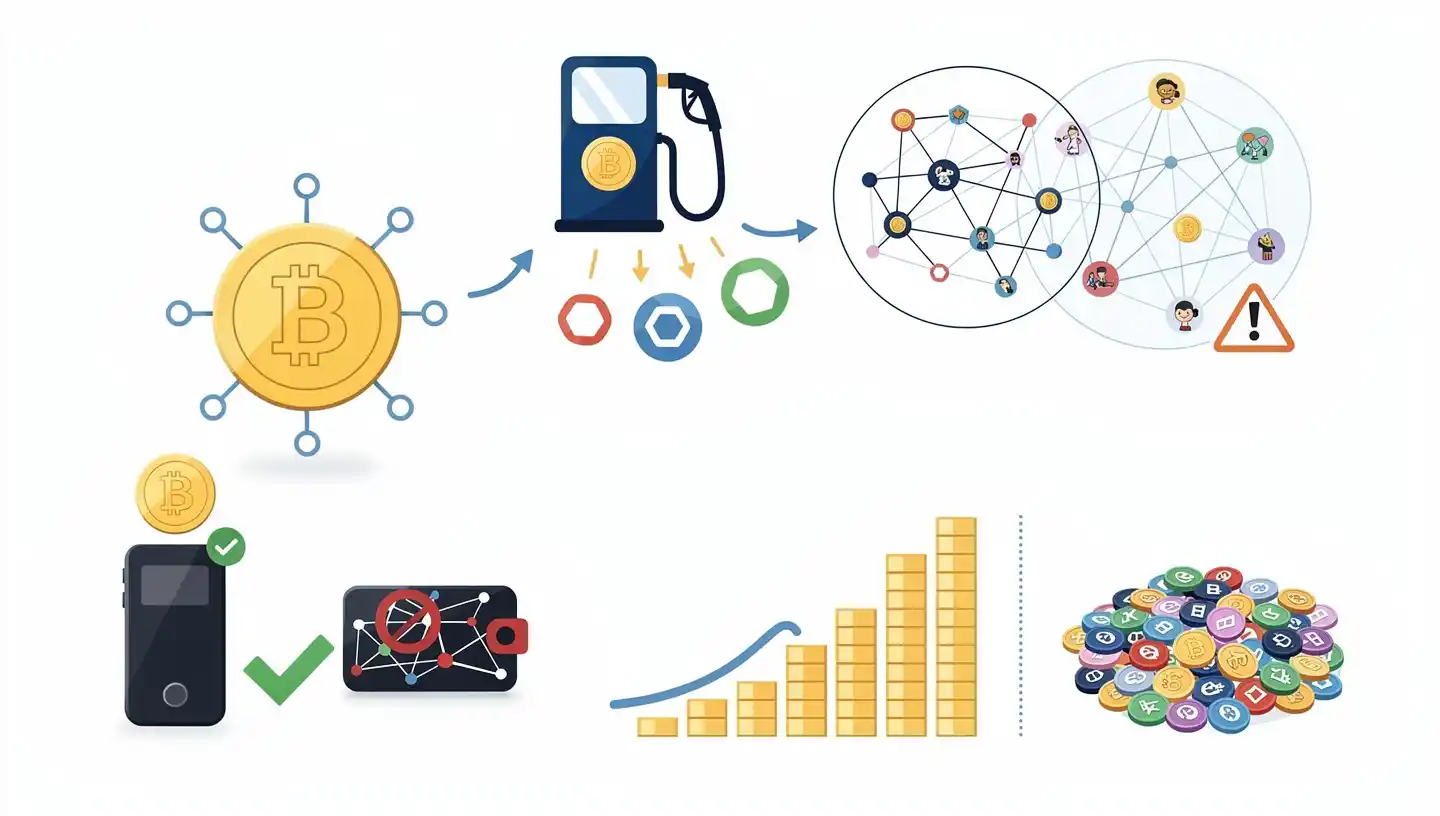
Knowing whether you are buying a coin or a token has practical consequences.
Wallet compatibility. Coins require wallets designed for their specific blockchain. A Bitcoin wallet stores BTC but cannot hold ERC-20 tokens. An Ethereum wallet can store Ether and any ERC-20 token because they share the same standard. If you try to send a token to a wallet on the wrong network, the funds can be lost.
Transaction fees. When you transfer a token on Ethereum, you pay the transaction fee in ETH, not in the token itself. This surprises many first-time users. Buying USDT on Ethereum does not mean you only need USDT in your wallet. You also need ETH to pay gas fees. Each blockchain uses its own native coin for fees, regardless of what token you are moving.
Network risk. A token’s operation depends on the health of the blockchain it runs on. If Ethereum experiences congestion, fees for all Ethereum-based tokens rise. If a blockchain were to shut down or experience a critical failure, the tokens built on it would be affected. A coin is only exposed to risks on its own network. This is a different risk profile, not necessarily better or worse.
Supply and issuance. Coins are released gradually through predictable protocol rules. Tokens are often created all at once and distributed in various ways: sold to investors, given to the team, airdropped to users, or used to fund development. Understanding the token distribution schedule matters when evaluating a project, because a large amount of supply held by insiders that will eventually be sold can put downward pressure on the price.
For context on how Bitcoin’s predictable supply issuance works through halvings and what that means for long-term value, read our Bitcoin history guide.
Are all cryptocurrencies either coins or tokens?
In practice, most are. But the terminology gets complicated because the word “cryptocurrency” is often used loosely to mean any digital asset on a blockchain, whether that is a coin with its own network or a token running on another. Exchanges list both under the same interface. Data platforms rank both by market cap. Many traders treat them as interchangeable.
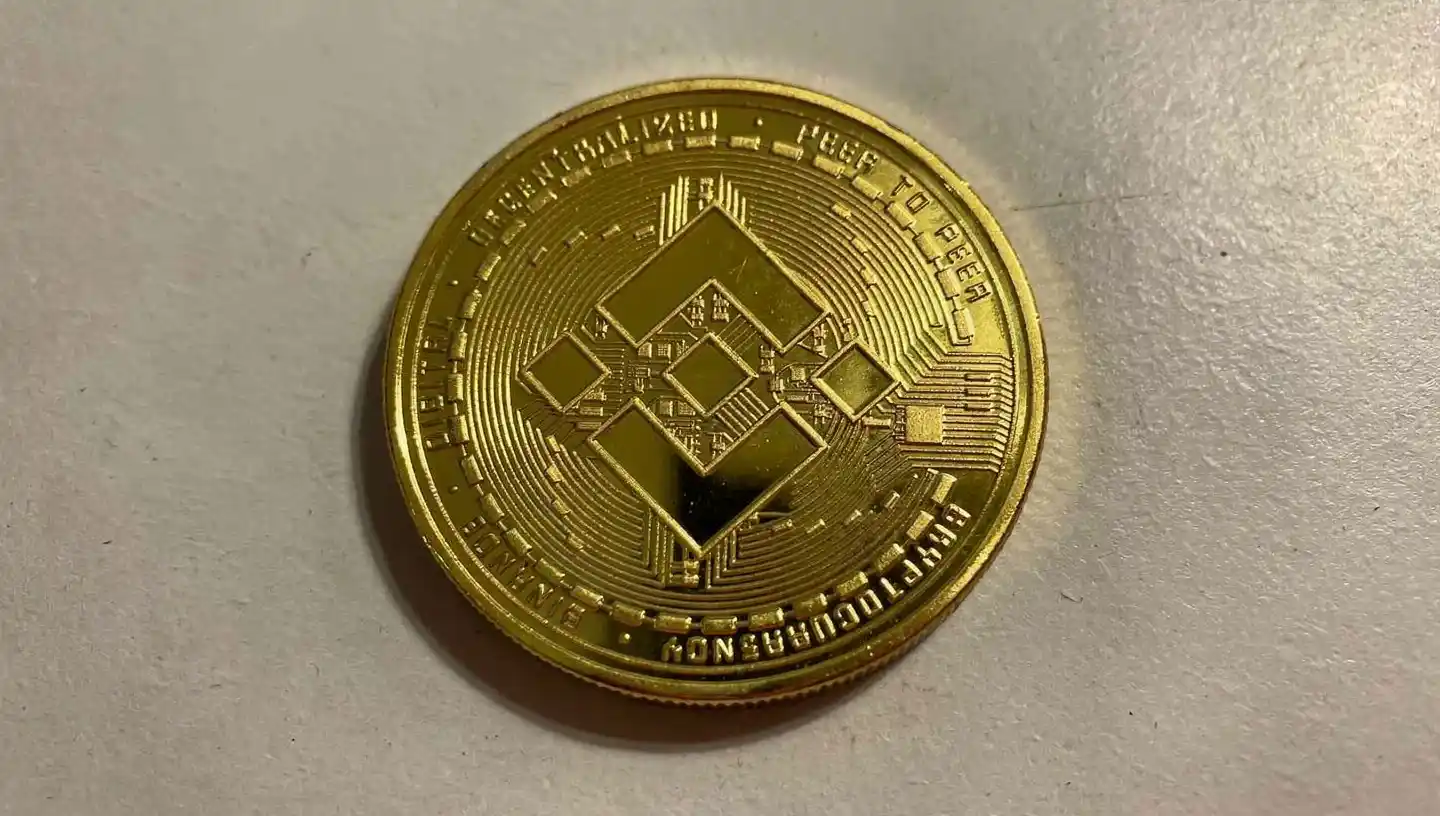
There is also a grey area. Some assets started as tokens and later migrated to their own blockchain, making them coins. Binance Coin (BNB) began as an ERC-20 token on Ethereum before Binance launched its own blockchain (BNB Chain), at which point BNB became a native coin. The category something belongs to is not always fixed forever.
The term “altcoin” adds another layer of confusion. Strictly speaking, an altcoin is any coin other than Bitcoin that has its own blockchain, but many people use the term to refer to any cryptocurrency that is not Bitcoin or Ethereum, including tokens. Context matters more than strict definitions in most casual crypto discussions.
For a look at how Satoshi Nakamoto designed the first blockchain and why the distinction between coins and tokens exists at all, see our piece on who created Bitcoin.
Frequently asked questions
What is the main difference between a coin and a token?
A coin has its own dedicated blockchain and is the native asset of that network. A token is built on top of an existing blockchain using a smart contract. Bitcoin and Ether are coins. Tether, Uniswap, and Chainlink are tokens.
Is Ethereum a coin or a token?
Ether (ETH) is a coin. It is the native asset of the Ethereum blockchain and is used to pay transaction fees on that network. The tokens built on top of Ethereum, such as USDT, UNI, and LINK, are tokens, not coins. The confusion arises because Ethereum is often called a “token platform,” but Ether itself is a coin.
Is Bitcoin a coin or a token?
Bitcoin (BTC) is a coin. It runs on its own blockchain, the Bitcoin network, and was the first cryptocurrency ever created. No other asset was involved in its creation or operation. It is the simplest example of a coin.
Can a token become a coin?
Yes. Some projects launch as tokens on an existing blockchain and later build their own blockchain, at which point the asset migrates to become a native coin. Binance Coin (BNB) started as an ERC-20 token on Ethereum before becoming the native coin of BNB Chain. This is called a mainnet launch.
Why do tokens need ETH to pay fees?
When you send a token that runs on Ethereum, the transaction is processed by the Ethereum network. The fee for that processing is paid in ETH, which is the native coin of Ethereum. This applies regardless of which token you are transferring. If you only hold USDT in an Ethereum wallet and have no ETH, you cannot send that USDT because you have nothing to pay the fee with.
What are the main types of crypto tokens?
The main categories are utility tokens (which give access to a service), governance tokens (which give voting rights over a protocol), security tokens (which represent ownership of an underlying asset), stablecoins (which are pegged to a fiat currency), and non-fungible tokens, or NFTs (which represent unique digital items).
Are stablecoins coins or tokens?
Most stablecoins are tokens. Tether (USDT) and USD Coin (USDC), the two largest by market cap, run on Ethereum and other blockchains as tokens. They do not have their own blockchains. A few stablecoins are coins native to their own networks, but these are the exception rather than the rule.
What is an ERC-20 token?
ERC-20 is the most widely used token standard on the Ethereum blockchain. It defines a set of rules that a token contract must follow to be compatible with wallets, exchanges, and other Ethereum applications. Most Ethereum-based tokens, including USDT, USDC, LINK, UNI, and AAVE, are ERC-20 tokens. ERC stands for “Ethereum Request for Comment,” and 20 is the proposal number that introduced this standard. The full technical specification is published by the Ethereum Foundation at ethereum.org.