In March 2021, a digital artist named Beeple sold a collage of his work at Christie’s auction house for 69 million dollars. The buyer received no canvas, no print, and no framed copy. There was nothing to hang on a wall and nothing to hold in their hands. What they received instead was a string of code stored on a blockchain, a record stating that they now owned the original version of that digital file. That record is called an NFT, short for non-fungible token, and the sale shocked the art world into paying attention to a technology that most people had never heard of. Around the same time, NBA Top Shot was selling video clips of basketball highlights for hundreds of thousands of dollars, and Twitter’s founder sold his first tweet as an NFT for nearly three million dollars. Whether those prices made sense was a question that divided collectors, investors, and critics. What was harder to dispute was that something genuinely new had arrived: a way to prove ownership of a digital asset on a public blockchain, using a certificate of ownership recorded in code rather than paper. Understanding what that actually means, how it works, and what the real limits of NFT ownership are is what this guide covers from the ground up.
What Is an NFT?
An NFT, or non-fungible token, is a unique digital identifier recorded on a blockchain that certifies ownership and authenticity of a specific asset. That asset can be a digital image, a video clip, a piece of music, a video game item, a domain name, or even a record tied to a physical object. The NFT is not the asset itself. It is the certificate of ownership for that asset, stored permanently and publicly on a blockchain where anyone can verify it.
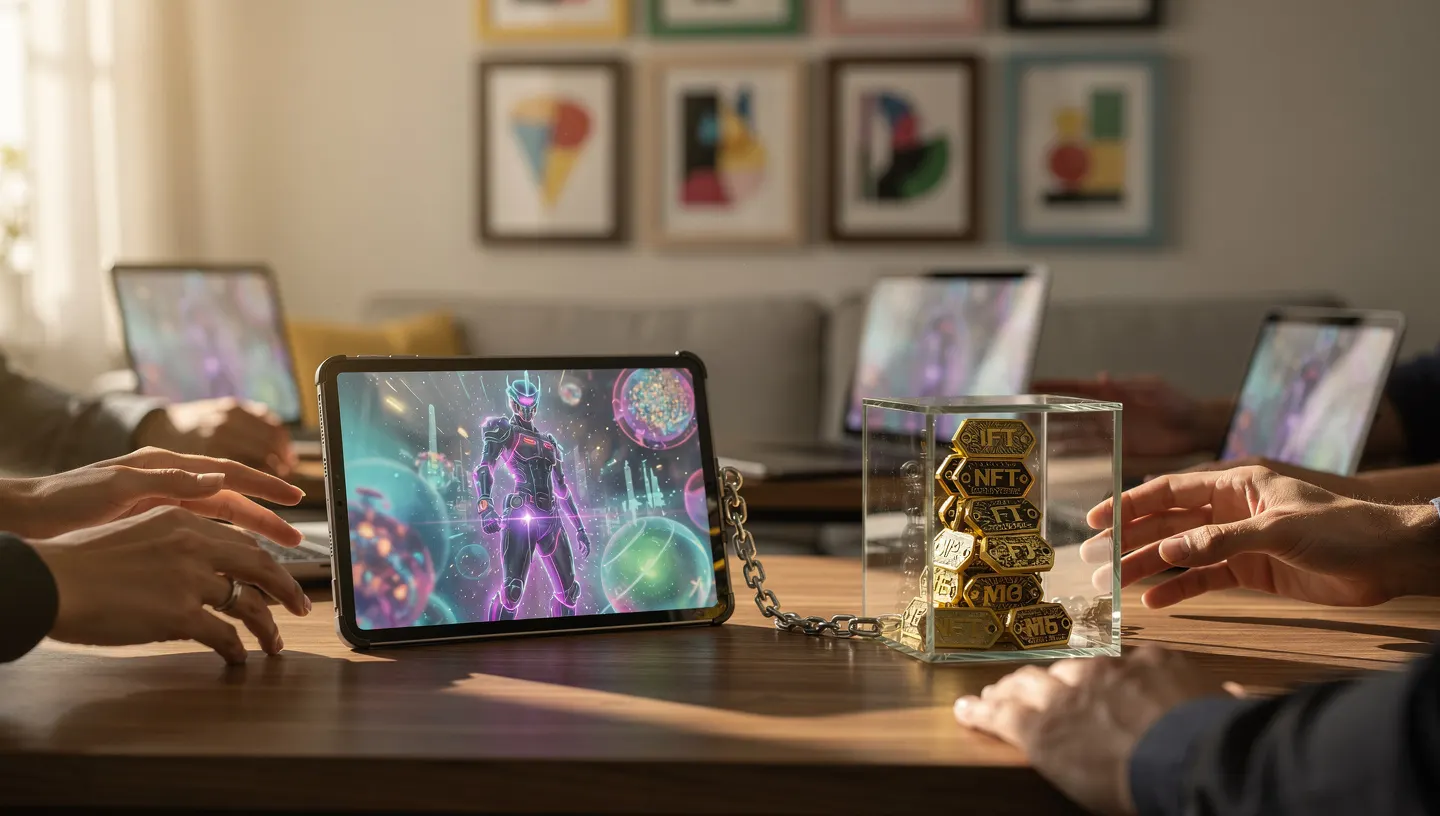
The crucial word in that definition is unique. Unlike a dollar bill or a unit of Bitcoin, which are interchangeable with any other dollar bill or Bitcoin of equal value, each NFT has its own distinct identity. No two are alike, and no one can duplicate or counterfeit an existing one. The blockchain records who created it, who has owned it, and every time it changed hands. That permanent, tamper-resistant record is what gives non-fungible tokens their value as proof of ownership in a world where digital files can otherwise be copied and shared endlessly at no cost.
What Does Non-Fungible Mean?
The word fungible comes from economics and describes something that can be exchanged on a like-for-like basis without any difference in value. A dollar bill is perfectly fungible. Hand someone a ten-dollar bill and receive two fives in return, and you have lost nothing. Bitcoin works the same way. One Bitcoin is always worth exactly the same as any other Bitcoin, and you can send fractions of one to anyone in the world. Fungibility is what makes money useful as a medium of exchange.
Non-fungible means the opposite. A concert ticket is non-fungible because it represents a specific seat on a specific date. Swapping your front-row seat for a seat in the back row is not an equal trade, even if both tickets cost the same price originally. A signed original painting is non-fungible. A numbered limited-edition print is non-fungible. Each one has individual characteristics that determine its value independently of any other item in the same category. NFTs bring this concept into the digital world by attaching a unique identifier to a digital file, making it possible to distinguish the original from any copy for the first time.
NFT vs. Cryptocurrency: What Is the Difference?
People often encounter NFTs and cryptocurrency together, and both live on blockchains, but they work very differently. The comparison below captures the key distinction.
| Property | Cryptocurrency (e.g., Bitcoin, ETH) | NFT |
|---|---|---|
| Fungibility | Fungible: each unit is identical | Non-fungible: each token is unique |
| Interchangeable? | Yes: 1 BTC = 1 BTC always | No: one NFT cannot replace another |
| Divisible? | Yes: can send 0.001 BTC | Generally no: sold as a whole unit |
| Purpose | Medium of exchange, store of value | Proof of ownership of a specific asset |
| Value determined by | Market price of the coin | Uniqueness, rarity, demand for that specific token |
Cryptocurrency is the medium you use to buy and sell NFTs. Ethereum is the blockchain most commonly used for non-fungible tokens, and ETH is the currency used to pay for them on most marketplaces. The digital scarcity that makes an NFT valuable comes from its uniqueness on the blockchain, not from the currency used to purchase it. To understand the broader world of coins and tokens that surround NFTs, the guide on crypto tokens vs. coins explains those distinctions clearly.
How Do NFTs Work?
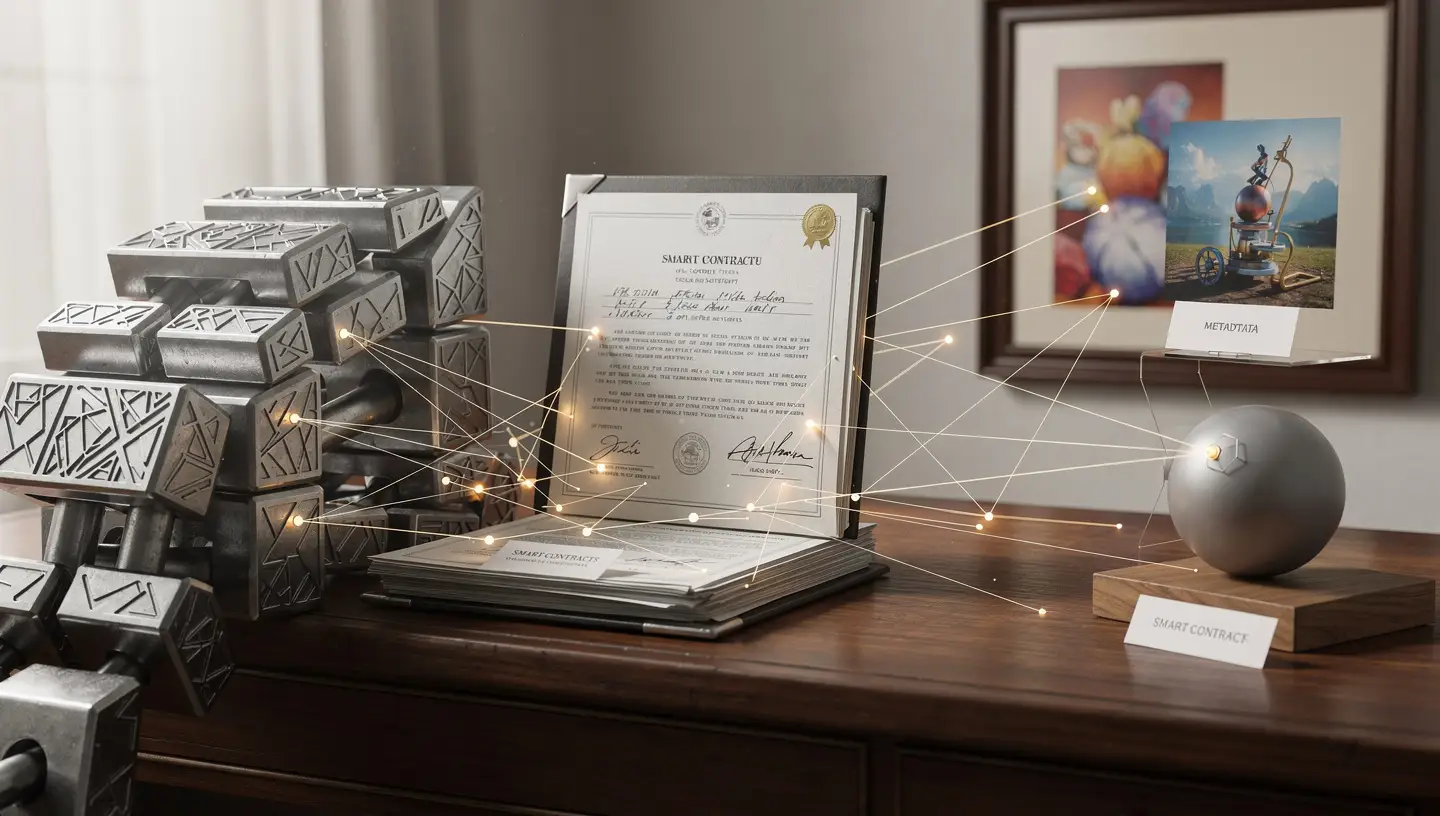
NFTs rely on three things working together: a blockchain to record ownership, smart contracts to define the rules, and metadata to describe what the token represents. Each layer serves a specific function, and removing any one of them breaks the whole system.
The Role of Blockchain in NFTs
A blockchain is a decentralized digital ledger that records transactions across a network of computers. Every record added to it is permanent and nearly impossible to alter after the fact. This immutable quality is exactly what makes a blockchain suitable for recording ownership. When you buy an NFT, that transaction is written into the blockchain permanently, alongside every previous sale going back to the moment the token was created. Anyone can look up that history at any time using a blockchain explorer.
This public record solves a problem that has existed since digital files were invented. A JPEG or an MP3 can be copied perfectly, with no quality loss, an unlimited number of times. Before blockchains, there was no way to say which copy was the original. The blockchain provides a public ownership verification record that answers that question definitively. The provenance of an NFT, meaning the documented chain of ownership from creation to present, is always visible and always accurate, because no one can go back and change what the blockchain recorded.
Ethereum hosts the majority of NFT activity because it was the first blockchain to support programmable smart contracts at scale. Other blockchains including Solana, Flow, and Tezos have since built their own NFT infrastructure, often with lower transaction fees than Ethereum, but Ethereum remains the dominant platform by total value and number of collections.
Smart Contracts and How Minting Works
A smart contract is a self-executing program stored on a blockchain that runs automatically when predetermined conditions are met. Every NFT is created and governed by a smart contract. That contract contains the rules: how many tokens in a collection can exist, who owns the original, and what percentage of future sales goes back to the creator as royalties. Once deployed, the smart contract runs exactly as written, with no ability for anyone, including the original creator, to change the terms mid-stream.
The process of creating an NFT is called minting. When a creator mints an NFT, they upload a digital file to a platform, the platform executes the smart contract, and the blockchain records a unique token ID tied to that file. That token ID is the NFT. The most widely used standard for creating NFTs on Ethereum is ERC-721, which defines how unique tokens are identified, transferred, and verified. A later standard called ERC-1155 allows a single contract to manage both fungible and non-fungible tokens, which is useful for gaming items where some assets are unique and others are identical.
One important detail about royalties: because they are programmed into the smart contract, a creator can receive a percentage of every future sale automatically, without needing to track down buyers or negotiate with galleries. If an artist sets a 10 percent royalty and their work sells five times, they collect a cut of every transaction, not just the first one. This was a genuinely new capability that traditional art markets had never offered.
What Does NFT Metadata Actually Store?
This is the part that surprises most people who buy their first NFT. The digital file, say a high-resolution image, is usually not stored directly on the blockchain. Storing large files on-chain is prohibitively expensive. Instead, the NFT‘s metadata contains a link pointing to where the file is actually stored, often on a decentralized file system like IPFS or on a centralized server.
The metadata also contains descriptive information: the title of the work, the name of the creator, the token ID, a description, and any attributes that define rarity within a collection. This metadata is what makes one NFT different from another within the same series. A CryptoPunk with rare sunglasses has different metadata than one without, which affects its value on the secondary market. The provenance record that the blockchain stores includes every ownership transfer, but the content the NFT represents lives in the metadata, which is a distinction worth understanding before committing funds.
For more on how blockchain technology secures these records, the article on what is cryptocurrency explains the underlying blockchain mechanics that NFTs depend on.
What Are NFTs Used For?
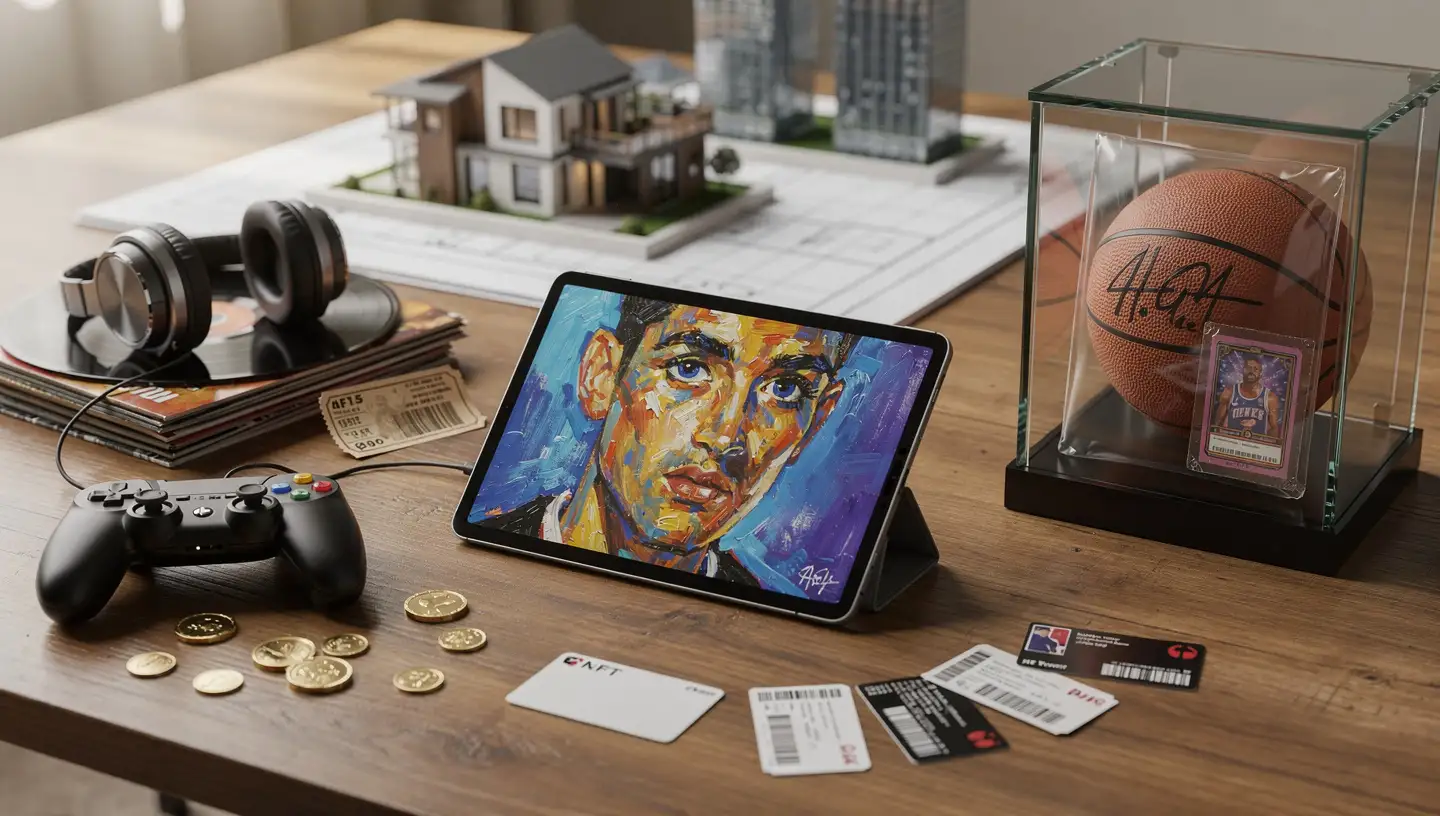
The range of things people have done with NFTs has grown well beyond digital art, though that remains the most recognizable category. The common thread across all NFT use cases is the same: a way to prove ownership and authenticity of something unique on a public record.
Digital Art
Digital art was the first major use case and still drives the most attention. Before NFT art, a digital artist could create a work, share it online, and watch it get reproduced thousands of times with no financial benefit from any of those copies. The original file was indistinguishable from every copy. NFTs changed that by letting artists mint a digital work as a unique token, giving collectors a way to own the authenticated original and giving artists a path to direct monetization without galleries, auction houses, or intermediaries taking a large cut.
Beeple’s $69 million Christie’s sale was the most spectacular example, but the broader market included thousands of artists selling work for prices ranging from a few dollars to hundreds of thousands. Collections like CryptoPunks, 10,000 pixelated character images generated algorithmically in 2017, became iconic status symbols in crypto circles, with individual punks selling for millions. Marketplaces like OpenSea became the primary venue for buying and selling NFT art, functioning similarly to how eBay works for physical goods but operating entirely on-chain.
Gaming and Play-to-Earn
Gaming NFTs represent in-game items, characters, land, or equipment that players genuinely own rather than rent from the game developer. In traditional games, a player who spends money on a character skin or a rare weapon owns nothing. If the game shuts down, those items disappear. With gaming NFTs, the item exists on the blockchain independent of any single company’s servers, and the player can sell it, trade it, or use it across compatible games.
CryptoKitties, launched in 2017, was the first NFT application to gain widespread attention. Players bred and traded digital cats, each one a unique token on Ethereum, and the game became so popular that it slowed the entire Ethereum network. Axie Infinity expanded this concept into a play-to-earn model where players in some countries earned real income by playing the game and selling the NFTs they collected. The play-to-earn model attracted hundreds of thousands of players but also exposed some of the risks: when token prices fell sharply, the income disappeared with them.
Music and Entertainment
Music NFTs give musicians a direct line to their audiences without record labels or streaming platforms taking the majority of revenue. An artist can release a song or album as an NFT, set their own royalties for future resales, and receive payment directly from buyers without an intermediary skimming the transaction. Kings of Leon released an album as an NFT in 2021, offering buyers special perks including limited-edition vinyl and front-row concert seats. The model has since expanded to cover exclusive audio content, behind-the-scenes footage, and access to artist communities.
The royalties mechanism matters particularly for musicians. When a song streamed on Spotify earns fractions of a cent per play, an artist selling a music NFT with a 10 percent resale royalty built in collects that percentage every time the token changes hands on the secondary market, for as long as the smart contract runs.
Sports Collectibles
NBA Top Shot brought NFTs to a mainstream sports audience by packaging licensed video highlights as digital collectibles. A LeBron James dunk sold on NBA Top Shot for $208,000 in early 2021. The appeal is structurally similar to physical trading cards: limited editions of specific moments create scarcity, and the rarity of a particular moment determines its value on the secondary market. The NFL, MLB, and various soccer leagues have since launched their own NFT collectible programs.
What distinguished these sports NFTs from physical cards was the ability to verify authenticity instantly. The blockchain record makes counterfeiting impossible in a way that physical memorabilia markets have always struggled with. Every NFT sports collectible has a verifiable ownership history from the moment it was minted to the present day.
Virtual Real Estate and the Metaverse
Parcels of land in virtual worlds like Decentraland and The Sandbox are sold as NFTs, giving buyers ownership of a specific piece of virtual real estate within that metaverse. Prices for desirable parcels reached six and seven figures during the 2021 boom, as brands and investors speculated that virtual worlds would become major platforms for commerce, entertainment, and social interaction. The metaverse land market has since contracted considerably, though active development continues across multiple platforms.
The ownership model for virtual real estate is the same as any other NFT: the blockchain records who holds the token, and the holder controls what gets built or displayed on that parcel within the rules of the platform. Unlike renting a space in a traditional game, owning a parcel as an NFT means the owner can sell it, rent it out, or develop it independently of the platform operator.
Tickets and Access Passes
NFT tickets give event organizers a way to sell admission with built-in ownership verification and anti-fraud protection. A traditional paper or PDF ticket can be copied and resold multiple times. An NFT ticket cannot be duplicated, and the smart contract governing it can include terms that cap resale prices or send a percentage of secondary sales back to the event organizer or artist. Several music festivals and sports events have experimented with NFT access passes that also function as collectibles after the event, retaining value for attendees who keep them.
Community membership is a related application. Projects like the Bored Ape Yacht Club used NFT ownership as a membership credential, granting holders access to private events, online communities, and collaborative creative projects. The NFT functioned simultaneously as a collectible, a status symbol, and an access pass.
How to Buy an NFT
Buying your first NFT requires a few setup steps that differ from purchasing a stock or a piece of traditional art. None of them are technically difficult, but each one is worth understanding before committing real money.
Step 1: Set Up a Crypto Wallet
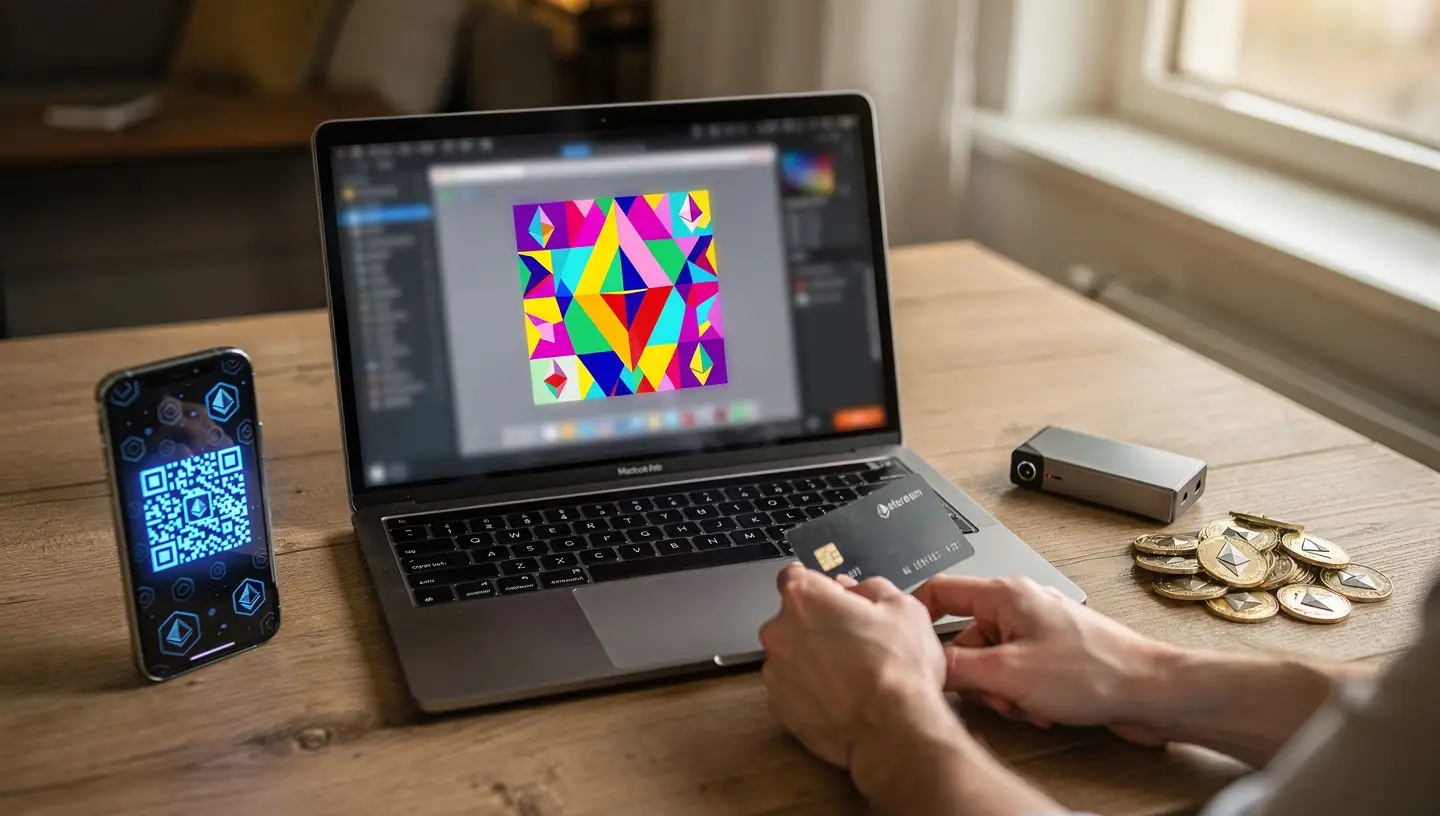
A crypto wallet is the software that holds your private key and lets you sign transactions on the blockchain. You need one before you can buy, sell, or hold any NFT. MetaMask is the most widely used browser extension wallet for Ethereum-based NFTs. Coinbase Wallet and Trust Wallet are popular mobile alternatives. Setting up a digital wallet takes a few minutes, but the most important step happens at the end: the wallet generates a seed phrase, a sequence of 12 or 24 words that is the only way to recover access if you lose the device. Write it down on paper, store it somewhere physically secure, and do not photograph it or save it anywhere connected to the internet.
Your private key is what gives you control over everything in your wallet. Anyone who obtains it gains full access to your funds and your NFTs. Legitimate platforms and wallets will never ask you to share it. Understanding what a private key actually is before you hold anything valuable is essential. The guide on what is a private key explains how it works and why it matters.
Step 2: Fund Your Wallet with Cryptocurrency
Most NFT marketplaces run on Ethereum, so you need ETH in your wallet to pay for purchases and gas fees. Gas fees are the small payments made to the Ethereum network validators who process and confirm your transaction. They are not optional and are charged on top of the purchase price. On busy days, gas fees can add anywhere from a few dollars to over a hundred dollars to the cost of a transaction, which makes small purchases on Ethereum uneconomical. Layer 2 networks built on top of Ethereum, and alternative blockchains like Solana and Flow, typically charge much lower fees.
You can buy ETH on any major cryptocurrency exchange, then transfer it to your wallet using the wallet’s public address. The transfer itself usually takes a few minutes and costs a small fee.
Step 3: Choose an NFT Marketplace
An NFT marketplace is a platform where you can browse, buy, and sell NFTs. OpenSea is the largest general NFT marketplace and supports the widest range of collections across multiple blockchains. Rarible is another open marketplace where any creator can list work. NBA Top Shot is a dedicated marketplace for NBA highlight collectibles. Magic Eden is the dominant marketplace on the Solana blockchain. Each platform has its own fee structure, typically a percentage of each sale.
Before buying anything, check the floor price of the collection you are interested in. The floor price is the lowest price at which any NFT in that collection is currently available. It gives you a baseline for what the market considers the minimum value of membership in that collection. Collections where the floor price has dropped close to zero are usually worth investigating carefully before committing funds.
How to Create and Sell an NFT
Creating an NFT is called minting, and the process is straightforward on most platforms. You need a crypto wallet, a digital file to tokenize (image, audio, video, or other format), and enough cryptocurrency to cover the gas fees for the minting transaction.
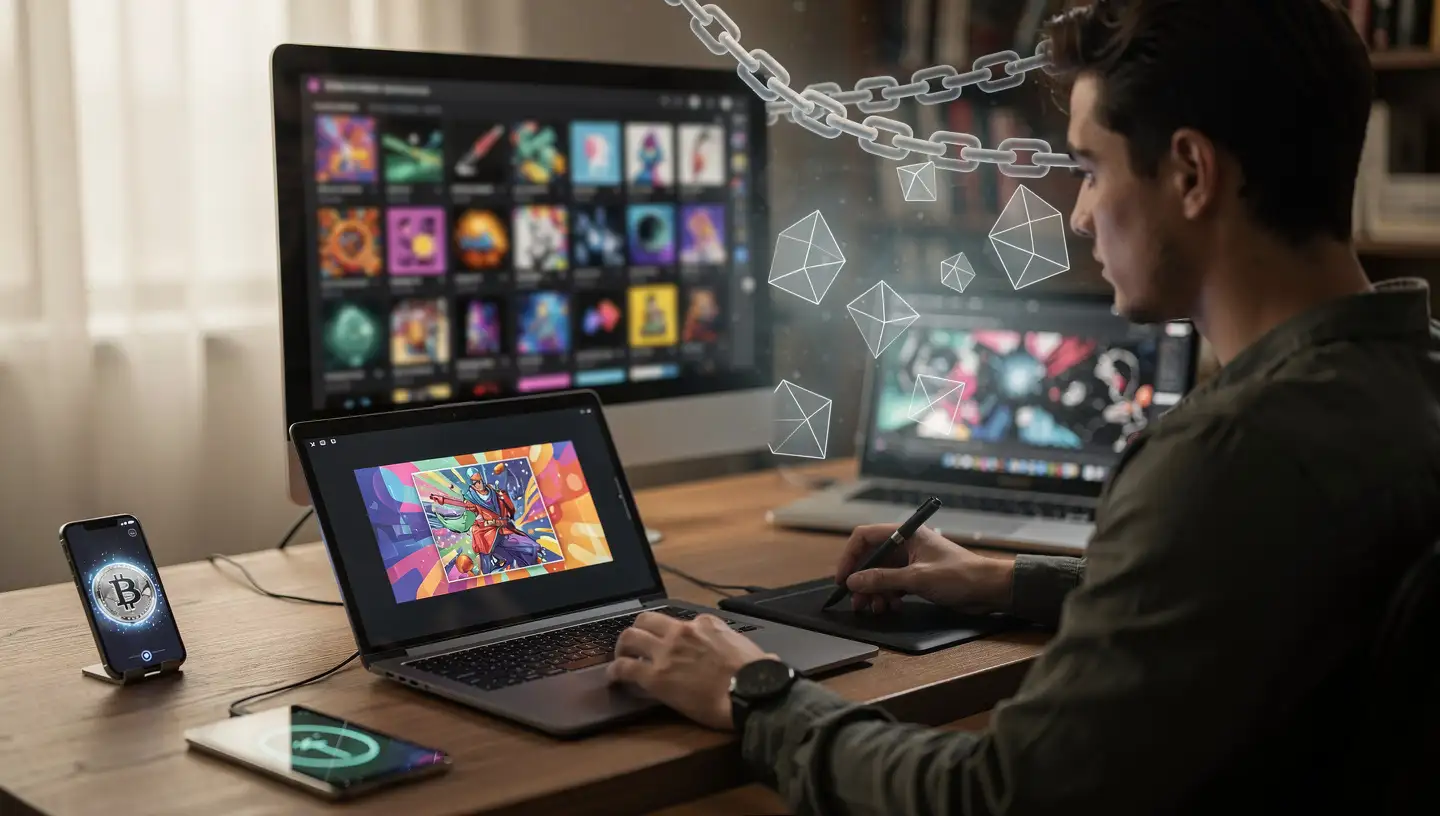
On OpenSea, the process involves connecting your wallet, uploading your file, filling in the title and description, setting the number of copies to mint, and deciding on a royalty percentage for future secondary sales. The platform then creates a smart contract and records the new token on the blockchain. Some platforms offer “lazy minting,” which delays the actual on-chain transaction until someone buys the NFT, saving the creator the upfront gas fees.
Setting a royalty percentage at the time of creation is one of the most important decisions. Most creators set between 5 and 10 percent. Too high and buyers will factor it into their willingness to pay on the secondary market. Too low and the creator misses ongoing income from future resales. Once the smart contract is deployed, the royalty terms cannot be changed.
Benefits of NFTs
The case for NFTs as a technology rests on several properties that did not exist before blockchains made them possible.
- Verifiable ownership and provenance: For the first time, a digital asset can have a clear, publicly verifiable ownership record going back to the moment it was created. The blockchain records every transaction permanently, making forgery and dispute over provenance practically impossible.
- Direct monetization for creators: Artists and musicians can sell work directly to buyers anywhere in the world, without galleries, labels, or intermediaries taking a large share of the revenue. The reduction in friction between creator and collector is genuine and significant.
- Programmable royalties: A creator who sets a resale royalty in the smart contract continues earning from their work every time it sells on the secondary market, automatically, without enforcement overhead. Traditional art markets offer no equivalent mechanism.
- Digital scarcity: By making it possible to create a provably limited edition of a digital asset, NFTs introduced scarcity to a medium where copying was previously costless and unlimited. That scarcity is the foundation of collectible value.
- Fractional ownership: Some platforms allow a single high-value NFT to be divided into smaller tokens, letting multiple buyers collectively own a work that would otherwise be out of reach for individual investors. This opens up categories of collecting to people without large amounts of capital.
Risks of NFTs
The same properties that make NFTs novel also create risks that buyers, sellers, and creators need to understand clearly before participating in this market.
Market Volatility and Speculation
The NFT market experienced one of the most dramatic collapses in recent financial history. After trading volume reached 17 billion dollars in 2021, the market contracted sharply through 2022. By mid-2022, sales were down more than 90 percent from their peak. A report in September 2023 claimed that more than 95 percent of NFT collections had fallen to zero monetary value. The NFT bubble inflated rapidly on a combination of genuine excitement about the technology and speculative buying by people who had little understanding of what they were purchasing.
NFT value is driven primarily by demand and perceived rarity, not by any underlying cash flow or utility that can be modeled. An NFT is worth what someone else is willing to pay for it, and that number can go to zero. The volatility in the broader cryptocurrency market directly affects NFT prices, since most are denominated in ETH. When ETH falls, the dollar value of any NFT portfolio falls with it, independent of any change in the token itself.
You May Not Own What You Think
This is the most important risk that most introductory guides skip over. Buying an NFT does not automatically give you copyright, trademark, or intellectual property rights to the underlying work. The legal scholar Rebecca Tushnet put it directly: in most cases, the purchaser acquires whatever the art world thinks they have acquired, but they definitely do not own the copyright unless it is explicitly transferred in a separate written agreement.
The creator of the work retains the copyright unless they specifically sign it over. The buyer of the NFT owns the token and the right to display the work for personal use, but the creator can still make other copies, license the work commercially, and create additional editions. Some high-profile NFT projects have granted commercial rights to token holders, but most have not. Reading the terms of any project before buying is not optional.
There is also the problem of link rot. Most NFTs store a link in their metadata pointing to where the actual file is hosted. If that hosting service shuts down or changes its URL structure, the link breaks and the NFT no longer points to anything. The token still exists on the blockchain, but the asset it was supposed to represent is gone. This has already happened to some early NFT collections.
Scams, Rug Pulls, and Fraud
The NFT market has been a target for fraud at every level. A rug pull is the most common scheme: a team launches a project with professional marketing and social media, attracts buyers, collects their funds, and then disappears, leaving holders with tokens that are worthless because no further development or community building ever occurs. Identifying a rug pull in advance is difficult because bad actors have learned to mimic the appearance of legitimate projects.
Wash trading is another widespread practice, particularly in NFT art markets. A seller creates the appearance of demand by selling an NFT to themselves across different wallets, inflating the apparent sale price to attract real buyers. This manipulates the market price and the provenance record simultaneously. Several studies of major NFT marketplaces found significant evidence of wash trading during the 2021 boom period. Doing due diligence means checking whether a project’s team is publicly identified, whether the code has been independently audited, and whether the sales history shows suspicious patterns.
Environmental Impact
Earlier versions of NFT activity on Ethereum drew criticism for energy consumption, since the proof-of-work model that Ethereum used before 2022 required large amounts of computing power to validate transactions. Ethereum switched to a proof of stake consensus model in September 2022, cutting its energy use by more than 99 percent according to the Ethereum Foundation. Most NFT activity on Ethereum today carries a fraction of the environmental impact it once did, though the transition did not eliminate all concerns, and NFT activity on proof-of-work blockchains still carries the original energy costs.
The History of NFTs
The first known NFT was created by Kevin McCoy and Anil Dash in May 2014. McCoy minted a video clip made by his wife on the Namecoin blockchain and sold it to Dash for four dollars during a live presentation in New York. The two called it “monetized graphics.” The concept did not attract much attention at the time.
The first wave of meaningful adoption came in 2017 on Ethereum. Curio Cards launched as the first NFT art project on Ethereum in May of that year. CryptoPunks, a collection of 10,000 algorithmically generated pixelated characters, emerged in June and established the profile picture collection format that would later define much of the market. CryptoKitties launched in December 2017, introduced the concept of breedable digital pets, and became the first NFT application to go genuinely mainstream before the term NFT was even widely used. The ERC-721 standard was formalized in 2018, giving developers a consistent framework for creating non-fungible tokens on Ethereum.
The 2021 boom changed everything. Beeple’s $69 million Christie’s sale in March 2021 introduced NFTs to audiences who had never followed cryptocurrency. The Bored Ape Yacht Club launched in April 2021 and quickly became one of the most valuable collections, with individual apes selling for millions and a holder community that included celebrities. NBA Top Shot brought sports fans into the market. Total trading volume across all platforms went from under 100 million dollars in 2020 to over 17 billion in 2021. The collapse that followed through 2022 left most collections worth a fraction of their peak prices, but the technology and the major platforms survived and continued developing.
For a broader view of how Bitcoin laid the groundwork for the blockchain infrastructure that NFTs depend on, the history of Bitcoin covers the foundational story from the beginning.
Are NFTs Still Worth Buying?
The honest answer is that it depends entirely on why you are buying. NFTs as speculative investments proved extremely dangerous for the majority of people who bought during the 2021 peak. Most lost money. The expectation that any NFT would appreciate in value simply because it was an NFT turned out to be wrong in the overwhelming majority of cases.
For collectors who genuinely value a specific work and want to support the artist directly, NFT art offers something real: a direct transaction with the creator, a verifiable record of ownership, and the knowledge that the artist benefits from any future resales. For gamers who want actual ownership of in-game assets they have earned or purchased, gaming NFTs offer something that traditional games never did. For creators who want to monetize work directly and build ongoing income from resale royalties, non-fungible tokens are a legitimate tool.
What NFTs are not, despite what the 2021 market suggested, is a reliable path to profit for people buying them primarily because they hope someone else will pay more later. The NFT market is small, illiquid, and subject to the full force of cryptocurrency volatility on top of the speculation specific to individual collections. Anyone considering a purchase should understand exactly what rights they are acquiring, who is behind the project, whether the smart contract has been audited, and whether they would be comfortable holding the token at zero.
Before going further into the world of NFTs and blockchain-based digital assets, understanding the full landscape of alternative cryptocurrencies that share the same infrastructure is useful background. The guide on what is an altcoin covers the broader categories of digital assets you will encounter across these markets.
The Bottom Line
What is an NFT in plain terms? It is a unique token recorded on a blockchain that proves ownership of a specific digital asset. It is not the asset itself. It is the certificate attached to it. The technology is real, the ownership record is verifiable, and the royalties mechanism is genuinely useful for creators. The speculation that surrounded the market in 2021 inflated prices far beyond what the underlying technology justified, and the collapse that followed was predictable in retrospect.
What remains after the speculation has cleared is a technology with legitimate uses: letting creators sell work directly to collectors, giving players real ownership of in-game assets, and making the provenance of digital art publicly verifiable for the first time. Whether any specific non-fungible token has value depends on what it represents, who created it, what rights it carries, and whether anyone wants it. Those are the same questions that determine value in any other collecting market. The blockchain just makes the answers easier to verify.
Frequently Asked Questions
What does NFT stand for?
NFT stands for non-fungible token. Non-fungible means unique and not interchangeable with another item of equal value. Token refers to the digital record stored on a blockchain. Together, the term describes a blockchain-based certificate that proves ownership of a specific, one-of-a-kind digital or physical asset.
Can you screenshot an NFT and own it?
Taking a screenshot of an NFT gives you a copy of the image, but not ownership of the token. The NFT itself is a record on the blockchain. That record cannot be copied or transferred without the private key of the current owner. A screenshot is similar to photographing a painting in a museum: you have an image of the work, but the original and the authenticated record of ownership still belong to whoever holds the token.
What do you actually own when you buy an NFT?
You own the token on the blockchain and, depending on the project’s terms, the right to display the associated digital file for personal use. You do not automatically acquire copyright, trademark, or commercial rights to the underlying work unless the creator explicitly transfers those rights to you in writing. Most NFT purchases do not include intellectual property rights. Always read the specific terms of any project before buying.
How are NFT taxes handled?
In most jurisdictions, including the United States, NFTs are treated as property for tax purposes. Buying an NFT is generally not a taxable event, but selling one is. Any gain from a sale is subject to capital gains tax, calculated as the difference between what you paid and what you received. Royalties earned from resales may be treated as ordinary income. Tax rules for NFTs are still developing in many countries, and consulting a tax professional familiar with digital assets before selling is strongly advised.
What is the floor price of an NFT collection?
The floor price is the lowest price at which any NFT in a given collection is currently listed for sale on a marketplace. It functions as the entry point for that collection and is widely used as a measure of the collection’s overall market health. A rising floor price suggests growing demand. A falling one suggests the opposite. Collections where the floor price approaches zero are generally considered to have failed unless specific development activity suggests otherwise.
What is minting an NFT?
Minting is the process of creating a new NFT on a blockchain. When you mint an NFT, a smart contract records a unique token on the blockchain, assigns it a token ID, links it to your metadata, and registers your wallet as the first owner. The process requires paying a transaction fee to the blockchain network. After minting, the NFT can be listed for sale, transferred, or held as a collectible.
Are NFTs the same as cryptocurrency?
No. Both NFTs and cryptocurrencies exist on blockchains, but they work differently. Cryptocurrencies like Bitcoin and ETH are fungible: each unit is identical and interchangeable with any other unit of the same coin. Non-fungible tokens are each unique: no two NFTs are alike, and they cannot be exchanged on a one-for-one basis. Cryptocurrency is typically used as the currency to buy and sell NFTs, but the two are distinct asset types with different properties and different purposes.