Cryptocurrency is a form of digital money that runs on a computer network with no bank or government controlling it. Transactions are recorded on a shared public database called a blockchain, and the supply of most cryptocurrencies is fixed by code, not by a central authority. Bitcoin was the first, launched in 2009. Today there are thousands of them, from Ethereum and Solana to stablecoins and meme coins, each built for a different purpose.
This guide explains what cryptocurrency is, how it works, why it has value, and what you need to know before you buy any. If you have never owned crypto before, start here.
- Cryptocurrency is a digital currency that no government or bank controls
- Transactions are recorded on a blockchain, a public ledger shared across thousands of computers
- Bitcoin was the first cryptocurrency, created in 2009 by an unknown person using the name Satoshi Nakamoto
- There are thousands of cryptocurrencies today, but most beginners start with Bitcoin or Ethereum
- Crypto is a high-risk asset and prices can drop sharply with no warning
What is cryptocurrency?
Cryptocurrency is a digital currency secured by cryptography, which is the science of encoding and decoding information. The word “crypto” comes directly from that: the unique software code that underpins each currency and makes it nearly impossible to counterfeit or spend twice.

Unlike the dollars in your bank account, cryptocurrency is not issued or managed by any government or central bank. No single institution controls the supply. Instead, the rules that govern how new coins are created and how transactions are confirmed are written into the software itself, and those rules run on a network of computers spread across the world.
Most cryptocurrencies are also decentralized, meaning no single person, company, or country can shut them down, freeze your balance, or reverse a transaction once it has been confirmed. That is one of the core properties that makes crypto different from a PayPal balance or a bank transfer.
The term “cryptocurrency” is often shortened to crypto. Both words refer to the same thing and are used interchangeably throughout this guide.
How does cryptocurrency work?
Every cryptocurrency runs on a blockchain. To understand how cryptocurrency works, you need to understand what a blockchain is and why it matters.
What is a blockchain?
A blockchain is a public database shared across thousands of computers at the same time. Every time someone sends cryptocurrency to another person, that transaction is broadcast to the network. Computers on the network collect those transactions into a group called a block. Once a block is full, it is added to the chain of all previous blocks. That permanent, ordered record is the blockchain.
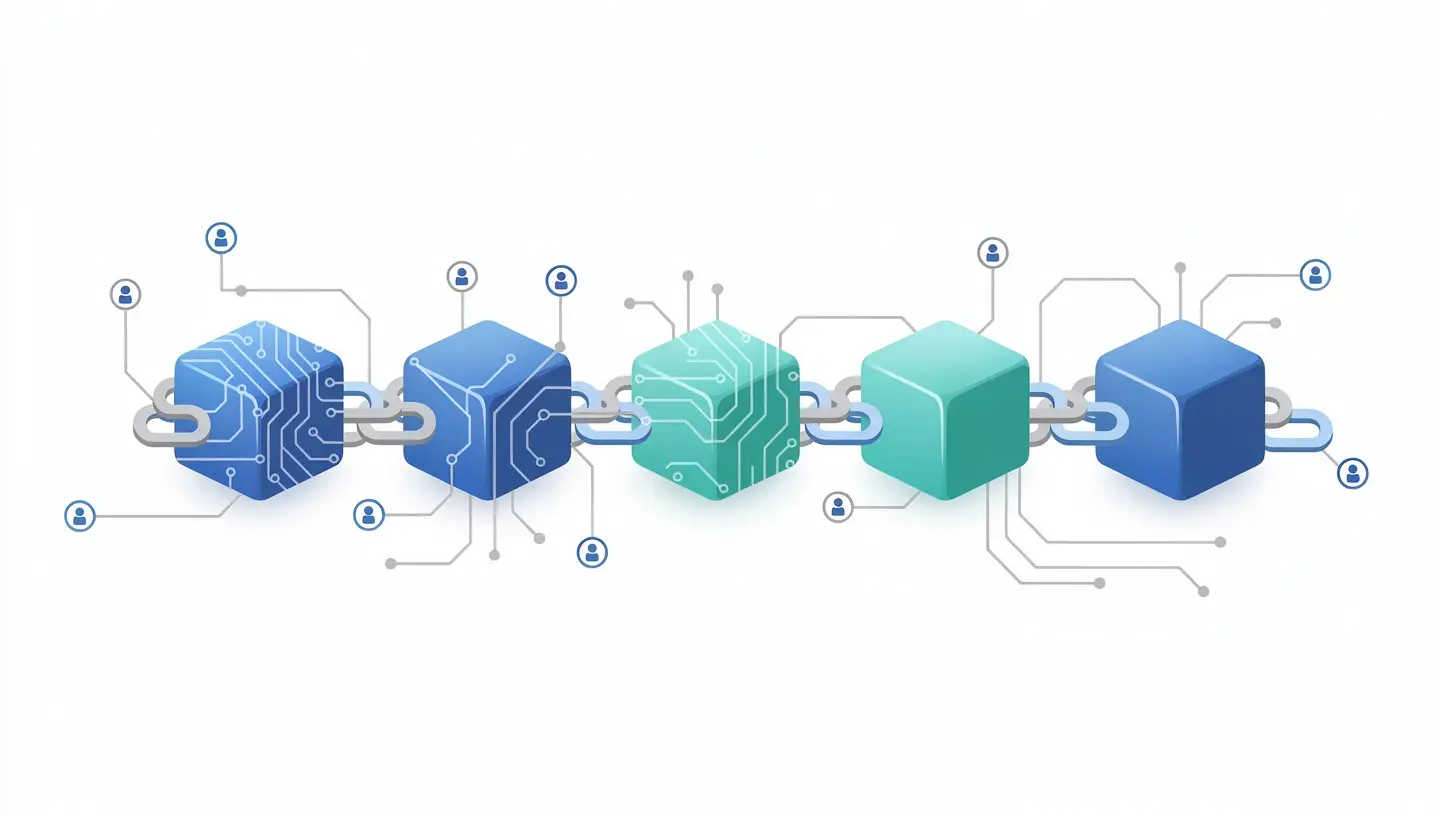
Because the blockchain is copied across thousands of computers simultaneously, there is no single version of it that can be altered without everyone else noticing. To change one transaction, you would have to change every subsequent block on more than half the computers in the network at exactly the same time. In practice, that is not possible for a large, established network like Bitcoin.
You can read more about how this technology underpins everything in crypto in our guide to what is blockchain technology and how does it work.
How are transactions recorded and verified?
When you send cryptocurrency, your transaction is broadcast to the network as unconfirmed. Computers on the network, called nodes, receive it and check that you actually own what you are trying to send. Once enough nodes agree that the transaction is valid, it is added to the next block and confirmed.
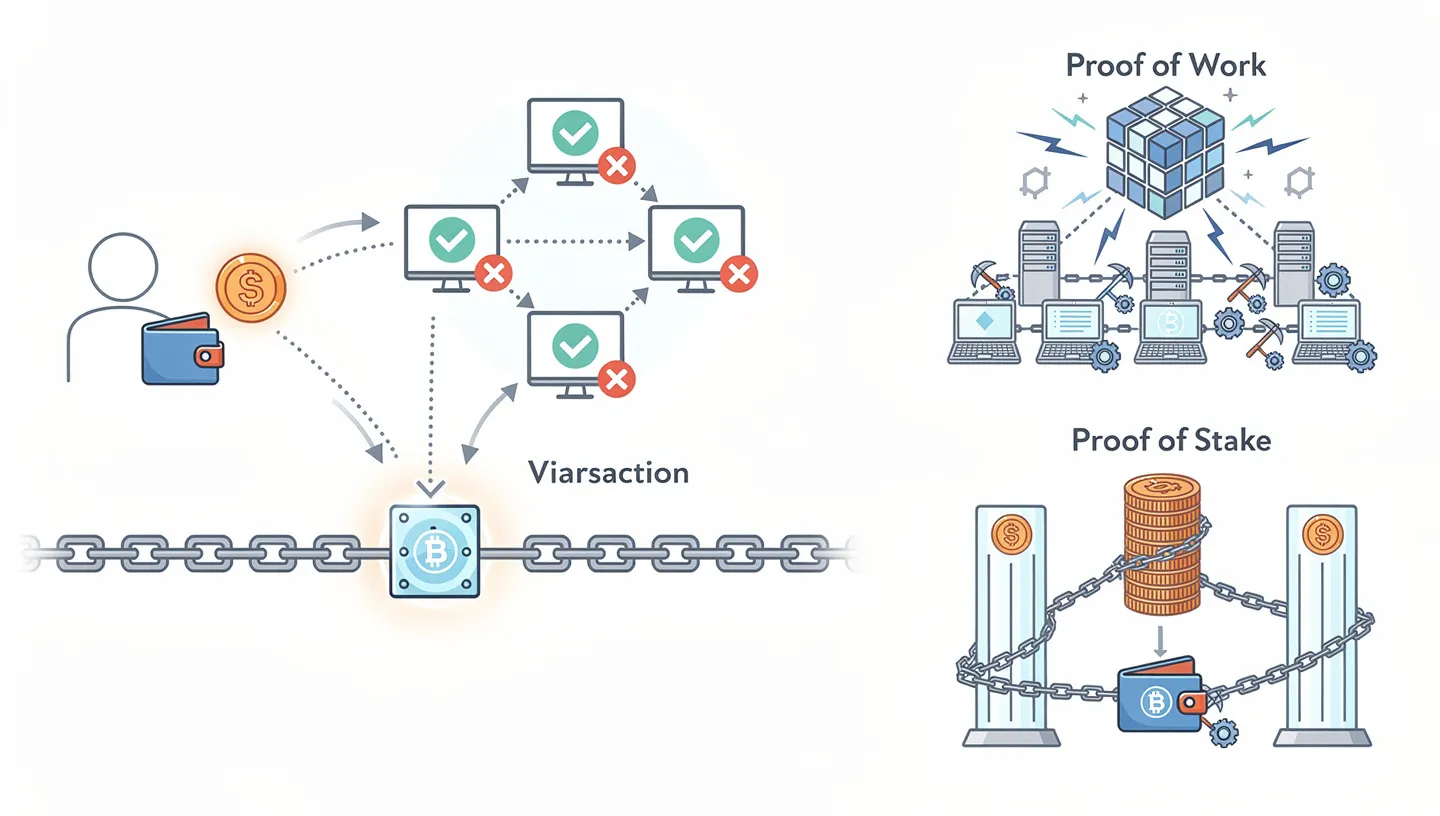
The method used to confirm transactions and add new blocks to the chain is called a consensus mechanism. The two most common are proof of work and proof of stake. Bitcoin uses proof of work, where computers compete to solve a mathematical puzzle and the winner earns the right to add the next block. Ethereum switched to proof of stake in 2022, where validators lock up their own coins as collateral to earn the same right. You can compare both systems in detail in our guide to proof of work vs proof of stake.
Why can’t blockchain records be changed?
Each block in the chain contains a unique identifier called a hash, which is generated from the data inside that block. It also contains the hash of the block before it. Change anything in an old block and its hash changes, which breaks its connection to every block that came after it. The rest of the network immediately rejects the altered version.
This is what people mean when they say blockchain records are immutable. Encrypted and chained together, they create a record that is effectively permanent. That same cryptographic security is why you hear the word “crypto” in cryptocurrency.
What makes cryptocurrency different from regular money?
The money in your bank account is fiat currency. Fiat means a government has declared it to be legal tender, and its supply is managed by a central bank. The US dollar, the euro, and the British pound are all fiat currencies. A central bank can print more of them when it wants to stimulate the economy, which affects the purchasing power of every existing unit in circulation.
Cryptocurrency works differently in several specific ways. You can read the full comparison in our guide to fiat currency vs crypto, but the key differences are these:
| Feature | Fiat currency | Cryptocurrency |
|---|---|---|
| Issued by | Government / central bank | Software algorithm |
| Supply control | Central bank | Fixed by code (most crypto) |
| Transaction authority | Bank, payment processor | Network of computers |
| Can be frozen | Yes | No (if held in your own wallet) |
| Physical form | Notes and coins | No physical form |
| Settlement time | 1-3 business days | Minutes to hours |
One important clarification: most countries do not consider cryptocurrency to be legal tender. You cannot walk into a shop and pay with Bitcoin the way you can with cash. Some businesses accept it, El Salvador made it legal tender in 2021, and the number of merchants who accept crypto is growing. But for most people, crypto is held as an asset rather than used as a daily currency.
Where does cryptocurrency get its value?
A physical note has value because a government backs it. A stock has value tied to a company’s earnings. Cryptocurrency has neither of those things, so the question of where its price comes from is one that every beginner should understand before buying anything.
The answer is a combination of several factors that vary by coin. The most important ones are:
- Scarcity. Bitcoin has a hard limit of 21 million coins. No more will ever be created. When demand rises and supply cannot increase, price goes up. This is the same logic that makes gold expensive.
- Utility. Ethereum has value partly because its network is used to run applications, process smart contracts, and power a large share of the DeFi market. The more it is used, the more ETH is needed to pay for transactions on it.
- Trust and adoption. The more people and institutions accept and hold a cryptocurrency, the more liquid and stable the market for it becomes. Bitcoin being held by major corporations and governments has reinforced its position as a store of value.
- Speculation. A significant share of crypto trading is speculative. People buy because they expect the price to rise, which itself pushes the price up, at least temporarily. When sentiment turns, it reverses just as fast. This is the main driver of the sharp price swings crypto is known for.
The honest answer is that crypto has no intrinsic value in the traditional financial sense. Its value is whatever buyers and sellers agree on at any given time, shaped by the factors above. That makes it fundamentally different from a company’s stock, and it is a big part of why prices can move 30 or 40 percent in a week in either direction.
What was the first cryptocurrency?
Bitcoin was the first cryptocurrency. It was created by a person or group using the name Satoshi Nakamoto, who published a technical document called the Bitcoin whitepaper in October 2008. The Bitcoin network went live on 3 January 2009, when the first block was mined. That first block, known as the genesis block, contained a message referencing a newspaper headline about bank bailouts, which many interpret as a statement about why Bitcoin was being built.

Nobody knows the real identity of Satoshi Nakamoto. The name was used in the early correspondence, then Nakamoto quietly handed over control of the Bitcoin code to other developers and disappeared from public view in 2010. Bitcoin has had no single leader since.
Before Bitcoin, there had been attempts at digital cash, including DigiCash in the 1990s and e-gold, but none of them solved the problem of double-spending without a central authority. Bitcoin solved it through the blockchain, making it the first working decentralized digital currency in history.
You can read the full history of Bitcoin and how it evolved into what it is today in our guide to Bitcoin history: from $0 to all-time highs.
What are the most popular types of cryptocurrency?
There are thousands of cryptocurrencies, but they are not all the same. They are built for different purposes, run on different technical architectures, and carry very different risk profiles. Here is how the main categories break down.
Bitcoin (BTC)
Bitcoin is the original cryptocurrency and the largest by market capitalization. It was designed to be a peer-to-peer digital currency with no central authority. Today most people hold it as a store of value rather than spending it day to day, which is why it is often compared to digital gold. Its supply is capped at 21 million coins, and the rate at which new coins are created is cut in half roughly every four years in an event called the halving.

If you want to understand how Bitcoin works in full, including how transactions are processed and who validates them, read our guide to what is Bitcoin.
Ethereum (ETH)
Ethereum is the second-largest cryptocurrency by market cap and the most widely used programmable blockchain. While Bitcoin was built primarily as a currency, Ethereum was designed as a platform where developers can build applications using smart contracts. A smart contract is a piece of code stored on the blockchain that executes automatically when certain conditions are met, without any third party involved.

Most of the DeFi market and a large share of NFTs run on Ethereum. Our guide to what is Ethereum covers this in full.
Stablecoins
Stablecoins are cryptocurrencies designed to hold a fixed value, usually pegged to the US dollar. The most widely used are Tether (USDT) and USD Coin (USDC), both worth $1 per coin. They are used by traders who want to stay in the crypto market without being exposed to price swings, and by people who want to send dollar-equivalent value across borders quickly and cheaply.
Stablecoins do not appreciate in value and are not investment assets in the same way Bitcoin is.
Altcoins
Altcoins is a catch-all term for any cryptocurrency that is not Bitcoin. That includes Ethereum, though in practice most people use “altcoin” to refer to smaller, newer coins like Solana, Cardano, XRP, and Avalanche.
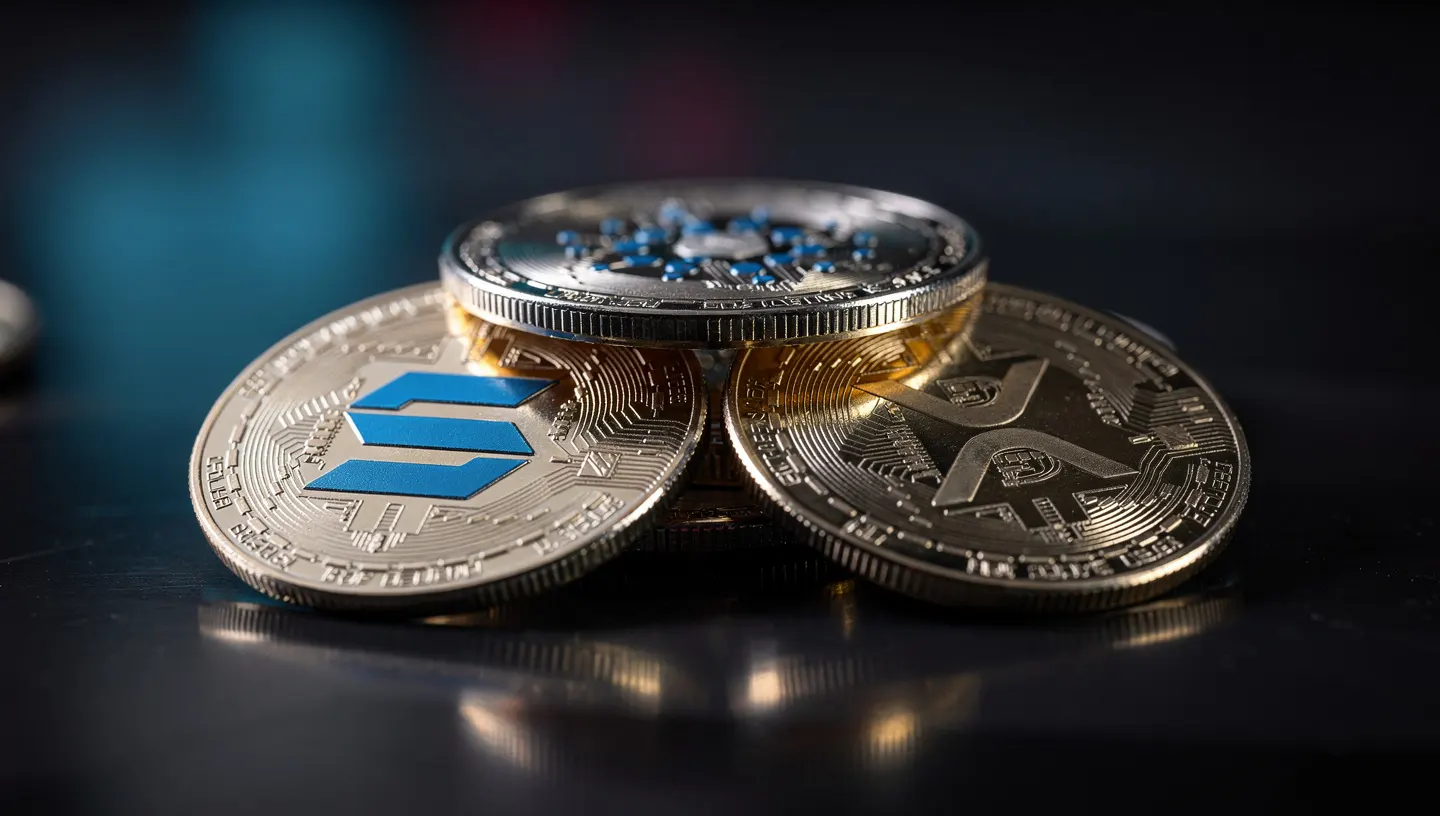
Some altcoins have genuine technical innovation behind them. Others are built on very little beyond speculation and marketing. The range in quality is enormous. You can learn the full distinction in our guide to what is an altcoin.
Meme coins
Meme coins are cryptocurrencies that started as jokes or internet references and gained value primarily through social media attention and community hype.

Dogecoin (DOGE) is the original, created in 2013 as a parody of Bitcoin. Shiba Inu (SHIB) followed in 2020 and reached a valuation of tens of billions of dollars at its peak, despite having no meaningful utility. Meme coins carry the highest volatility of any crypto category. Their prices can rise hundreds of percent in days and fall just as fast.
What can you do with cryptocurrency?
The use cases for crypto have expanded considerably since Bitcoin launched in 2009. Here are the main ones that are relevant to most people today.
- Store of value. Holding Bitcoin or other assets in the expectation that they will be worth more in the future. This is how most retail investors currently use crypto.
- Payments. Sending money to anyone in the world in minutes, without a bank, regardless of borders. Particularly useful for international transfers where bank fees and processing times are significant.
- Decentralized finance (DeFi). Borrowing, lending, and earning interest on crypto holdings using protocols that operate without banks or brokers. You can read how this works in our guide to what is DeFi.
- NFTs. Non-fungible tokens are unique digital assets recorded on a blockchain. They have been used to represent ownership of digital art, music, collectibles, and gaming items.
- Smart contracts. Automating agreements between parties in business, legal, and financial contexts without intermediaries. Our guide to what is a smart contract explains how they work and where they are already being used.
- Staking. Locking up your crypto on a proof-of-stake network to help validate transactions and earn rewards in return. This is covered in our guide to what is crypto staking.
How do you buy cryptocurrency?
Most people buy cryptocurrency through a cryptocurrency exchange. If you are wondering what a crypto exchange is: it is a platform where you create an account, verify your identity, deposit money from your bank, and then buy or sell crypto.
The process is similar to opening a brokerage account for stocks, but most crypto exchanges are faster to set up. You can read our full comparison in our guide to best crypto exchanges.
Choosing a cryptocurrency exchange
The main things to look at when choosing an exchange are fees, the range of coins available, security history, and whether it is regulated in your country. For most beginners, a regulated exchange with a straightforward interface is the right starting point. Coinbase, Kraken, and Binance are among the most widely used globally. Each has different fee structures and coin availability, so it is worth comparing them before you sign up.
Setting up a crypto wallet
When you buy crypto on an exchange, the coins are held in the exchange’s own wallet on your behalf. This is convenient but it means you do not fully control the coins. If the exchange is hacked or goes bankrupt, your funds are at risk. The alternative is a crypto wallet you control yourself. A wallet stores your private key — in crypto, a private key is the cryptographic proof that you own the coins at a given address. Without the private key, you cannot access your funds. This is why losing your private key means permanently losing your coins. There is no recovery process.
Wallets come in two main forms: software wallets, which are apps on your phone or computer, and hardware wallets, which are physical devices that store your private key offline. Hardware wallets are more secure because they are not connected to the internet. Our guide to what is a crypto wallet covers the types, the tradeoffs, and how to set one up.
How is cryptocurrency taxed?
In most countries, cryptocurrency is treated as a capital asset rather than a currency for tax purposes. In the United States, the IRS classifies crypto as property. That means any time you sell, swap, or spend cryptocurrency, the difference between what you paid for it and what you received is a taxable gain or loss, the same way it works with stocks.
This catches a lot of beginners off guard. Swapping Bitcoin for Ethereum on an exchange is a taxable event. Paying for something with crypto is a taxable event. Simply holding crypto and not selling it is not taxable in most jurisdictions. Tax rules vary significantly by country, so if you are unsure how crypto is taxed where you live, a tax professional who has experience with digital assets is the safest option before you start trading actively.
What are the risks of investing in cryptocurrency?
Crypto is a high-risk asset class. Anyone telling you otherwise is either mistaken or trying to sell you something. The risks below are not hypothetical. Each of them has caused real, significant losses for real people.
Volatility
Cryptocurrency prices are highly volatile. Bitcoin has dropped more than 80 percent from its peak on three separate occasions in its history. Smaller coins have dropped 95 percent or more and never recovered. A drop that would be catastrophic in any other asset class is not unusual in crypto. If you are investing money you cannot afford to lose, or money you need within the next few years, crypto is not an appropriate place for it.
Security and scams
Crypto attracts a large number of scams. These include fake exchanges, phishing attacks, rug pulls (where developers abandon a project and take the funds), and social engineering attacks where someone convinces you to send them your private key or move your funds to a “safer” wallet they control. The Federal Trade Commission reported that crypto scam losses in the US exceeded $1 billion in a single year. The irreversible nature of crypto transactions makes recovery effectively impossible once funds are sent.
Regulatory uncertainty
The legal status of cryptocurrency varies by country and is still evolving. Some countries have banned it outright. Others have introduced licensing requirements for exchanges. The US, UK, and EU have all introduced or proposed new frameworks in recent years. Regulatory changes can affect prices sharply: when China banned crypto mining in 2021, Bitcoin dropped roughly 50 percent in weeks. Holding crypto means accepting that the rules in your jurisdiction could change.
Is cryptocurrency a good investment?
Nothing in this guide is financial advice, and whether crypto is right for you depends entirely on your situation. That said, there are a few honest observations worth making.
Bitcoin has been the best-performing asset of the past decade by a significant margin. Anyone who bought and held it from almost any point before 2020 is significantly up. That track record exists. At the same time, most altcoins have not performed nearly as well over long periods, many have gone to zero, and anyone who bought Bitcoin near the top of its 2021 cycle had to wait over two years to recover their position.
The more useful question is not whether crypto is a “good investment” as a category, but what you are buying, why you are buying it, what you can afford to lose, and how long your time horizon is. A small position in Bitcoin held over several years is a very different risk profile from trading altcoins with money you need next year.
If you are just starting out, our guide to how to invest in Bitcoin covers the practical steps for your first purchase.
Common cryptocurrency terms explained
Crypto comes with its own vocabulary and it can be confusing at first. Here are the terms you are most likely to encounter as a beginner. For a broader starting point, our crypto for beginners guide walks through everything in sequence.
- Altcoin. Any cryptocurrency other than Bitcoin. The term covers everything from Ethereum to obscure meme coins with a $50,000 market cap.
- ATH (all-time high). The highest price a coin has ever reached. You will see people saying a coin is “at ATH” or “below ATH” when discussing price levels. Our guide to ATH crypto meaning explains how it is used.
- Bitcoin dominance. The percentage of the total cryptocurrency market cap that belongs to Bitcoin. When Bitcoin dominance rises, it usually means money is moving out of altcoins and into Bitcoin. When it falls, the opposite is happening. Our guide to what is Bitcoin dominance explains what to watch for.
- DeFi (decentralized finance). Financial services built on blockchain networks that operate without banks or brokers. Includes lending, borrowing, and trading.
- Gas fee. The cost of processing a transaction on a blockchain like Ethereum. Gas fees fluctuate based on how busy the network is.
- HODL. Originally a typo for “hold” in a 2013 forum post, now crypto slang for holding a coin long-term rather than selling during price drops.
- Market cap. The total value of all coins in circulation, calculated by multiplying the price of one coin by the total number in circulation. It is the standard measure of a cryptocurrency’s size. Our guide to what is market cap in crypto explains how to use it.
- NFT (non-fungible token). A unique digital asset recorded on a blockchain. Unlike Bitcoin, where every coin is identical, each NFT is one of a kind. Our guide to what is an NFT explains how they work and what they are used for.
- Private key. A long string of characters that proves ownership of a crypto address. Anyone who has your private key controls your crypto. Never share it.
- Public key. Your wallet’s address, which you can share openly so others can send you crypto. Think of it like your account number.
- Staking. Locking up crypto on a proof-of-stake network to help validate transactions and earn rewards.
- Token vs coin. A coin runs on its own blockchain (Bitcoin, Ethereum, Solana). A token is built on top of an existing blockchain (most DeFi and NFT projects are tokens built on Ethereum). Our guide to crypto token vs coin covers the distinction.
- Wallet. Software or hardware that stores your private key and lets you send and receive crypto.
The bottom line
Cryptocurrency is a genuinely new kind of financial asset, and understanding it takes some time. The core idea is simple: digital money that no single institution controls, secured by mathematics and maintained by a distributed network of computers. The thousands of coins, the DeFi protocols, the NFT markets, all of it builds on that foundation.
If you are just starting out, the most useful thing you can do is take it slowly. Understand what you are buying before you buy it. Keep your first position small. Use a regulated exchange. Learn how wallets work before you move coins off an exchange. The technology rewards people who understand it and tends to punish people who move fast without understanding what they are doing.
Bitcoin and Ethereum are the sensible starting point for most beginners. They are the most liquid, the most studied, and the most widely held. Everything else is a layer on top of that.
For further reading on how cryptocurrency is regulated in different countries, the Financial Stability Board’s crypto-assets page provides official international regulatory positions, and the US Commodity Futures Trading Commission (CFTC) Bitcoin page covers how the US government classifies and oversees crypto markets.
Frequently asked questions
Is cryptocurrency real money?
Cryptocurrency is real in the sense that it has measurable value and can be exchanged for goods, services, and other currencies. However, it is not legal tender in most countries, which means businesses and individuals are not required to accept it as payment. Most governments treat it as a capital asset, similar to stocks or property, rather than as money in the legal sense.
Can you lose all your money in cryptocurrency?
Yes, you can. A coin can go to zero if its development team abandons it, if it loses all market interest, or if it turns out to be a scam. Even large, established coins like Bitcoin have dropped more than 80 percent from their highs in previous bear markets. You should never invest more than you can afford to lose entirely. That is not a disclaimer. It is genuinely how the asset class behaves.
How is cryptocurrency different from stocks?
A stock represents a share of ownership in a company with actual revenue, employees, and assets. If a company is profitable, that profit can be returned to shareholders. Cryptocurrency has no underlying company in most cases. Its value comes from network adoption, scarcity, utility, and market sentiment. This makes crypto fundamentally harder to value using the tools that work for stocks.
Do you pay tax on cryptocurrency?
In most countries, yes. The United States, United Kingdom, Australia, and most of the EU all treat cryptocurrency as a taxable asset. Buying and holding is not typically taxable, but selling, swapping, or spending crypto usually triggers a capital gains event. Tax rules change and vary by country, so check the current rules in your jurisdiction or speak with a tax professional before you start trading.
What is the safest cryptocurrency?
No cryptocurrency is safe in the sense of being guaranteed to hold its value. Bitcoin is generally considered the most stable of the major cryptocurrencies because of its size, liquidity, and the length of its track record, but it has still lost more than 80 percent of its value at points in the past. Stablecoins like USDT and USDC are designed to hold a fixed value pegged to the dollar, but they carry their own risks, including counterparty and regulatory risk.
How do you store cryptocurrency safely?
The safest way to store cryptocurrency is in a hardware wallet that you control, stored offline and backed up in a secure location. Your private key should never be shared with anyone, stored in a photo on your phone, or written in an email. If you are keeping a small amount on an exchange short-term, use an exchange with a strong security record and enable two-factor authentication. For any meaningful amount of crypto, learning how to use a hardware wallet properly is worth the time.